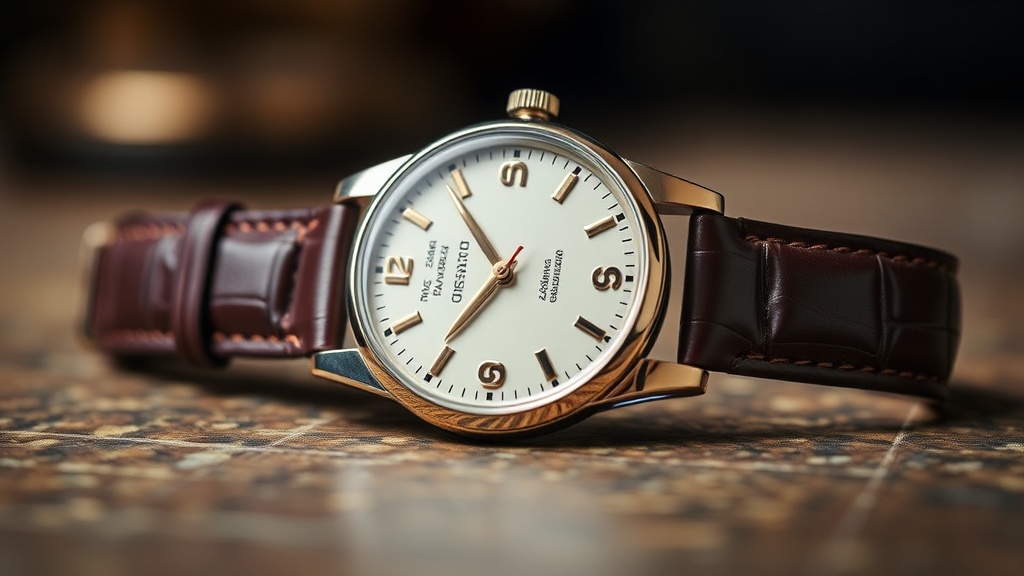
3 Reasons Your Vintage Designer Watches Are Running Slow

Dried and Aging Lubricants
Worn Internal Components
Magnetization of the Hairspring
3 Reasons Your Vintage Designer Watches Are Running Slow
A 1960s Omega Seamaster or a vintage Cartier Tank should be a paragon of precision, yet many collectors find their timepieces losing several minutes a day. This loss of accuracy is rarely a random occurrence; it is almost always a mechanical symptom of a specific internal failure. Understanding these technical causes allows you to communicate more effectively with watchmakers and prevents you from overpaying for unnecessary parts. This article examines the three primary mechanical culprits behind slow-running vintage watches: lubricant degradation, magnetism, and power reserve depletion.
When a mechanical movement loses time, it is essentially struggling against internal resistance. Just as a fountain pen with dried ink in its feed will skip or fail to write, a watch movement with compromised internals cannot maintain its intended frequency. Identifying whether your issue is a simple maintenance requirement or a more serious structural problem is the first step in preserving the value of your collection.
1. Dried or Degraded Lubricants
The most frequent cause of a vintage watch running slow is the breakdown of specialized oils. Inside a movement, tiny droplets of synthetic or organic oils sit on high-friction points such as the pallet stones, the escape wheel, and the balance staff. These oils ensure that the metal-on-metal contact remains fluid and efficient. Over a period of five to ten years, these lubricants undergo a chemical change: they either evaporate, thicken into a gummy residue, or attract microscopic debris.
When the oil thickens, it creates "drag" on the movement. This resistance acts like a weight on the balance wheel, slowing its oscillations. If you have a vintage Rolex Datejust that has not been serviced in a decade, the oil has likely turned into a viscous paste. Instead of the parts gliding past one another, they are effectively fighting through a microscopic sludge. This increased friction consumes the energy provided by the mainspring much faster than intended, resulting in a significant loss of time.
How to identify this issue:
- The "Stutter" Effect: If the watch runs well for a few hours after being fully wound but begins to lose time rapidly as the power wanes, the lubricant is likely the culprit.
- Long Service Intervals: If the timepiece has not undergone a professional COA (Clean, Oil, and Adjust) in over five years, assume the lubricants are compromised.
- Physical Resistance: If you feel a slight resistance when winding a manual-wind movement, it may indicate that the thickened oil is affecting the winding train as well.
To rectify this, a professional watchmaker must perform a complete movement overhaul. This involves more than just adding a drop of oil; the entire movement must be disassembled, every component cleaned in an ultrasonic bath with specialized solutions (such as Elma), and then reassembled with fresh, high-grade synthetic oils like Moebius 9010. Do not attempt to "oil" a vintage watch yourself with household lubricants, as this will cause permanent damage to the delicate pivots.
2. Magnetic Interference
In the modern era, magnetism is a silent killer of vintage mechanical accuracy. While mid-century watchmakers designed movements to be robust, they did not account for the sheer density of magnetic fields produced by contemporary technology. If your vintage Longines or Tudor has suddenly started gaining or losing significant amounts of time, it may have become magnetized.
Magnetism affects the hairspring—the tiny, coiled spring that regulates the watch's beat. The hairspring is the "heartbeat" of the watch. When the coils of the hairspring become magnetized, they begin to attract one another. Instead of expanding and contracting freely, the coils stick together. This effectively shortens the spring, which causes the watch to run much faster. However, in some vintage movements, magnetic interference can also cause the escapement to struggle, leading to erratic behavior that manifests as running slow or stopping entirely.
Common sources of magnetism:
- Electronic Devices: Modern smartphones, tablets, and high-end wireless headphones.
- Magnetic Clasps: Many contemporary designer handbags and clothing fasteners use strong neodymium magnets that can inadvertently magnetize a watch resting nearby.
- Speakers and Audio Equipment: Large home theater systems or even magnetic covers on laptop computers.
The good news is that magnetism is one of the easiest issues to diagnose and fix. A watchmaker can use a specialized tool called a demagnetizer (or degausser) to neutralize the magnetic field. This process involves passing the watch through a rapidly alternating magnetic field that gradually reduces the magnetism to zero. If your watch is running erratically, a quick degaussing session at a local jeweler is often the first step before moving to a more expensive full service. However, be aware that if the magnetism has caused physical damage to the hairspring through repeated sticking, a replacement may be necessary.
3. Mainspring Fatigue and Power Reserve Issues
The third reason a vintage watch runs slow is a failing power source: the mainspring. The mainspring is a long, coiled ribbon of steel housed inside the barrel. When you wind the watch, you are tightening this coil, storing potential energy. This energy is then released slowly through the gear train to drive the hands. Over decades of use, the metal in the mainspring undergoes "fatigue." It loses its elasticity and its ability to hold a consistent tension.
A fatigued mainspring provides uneven torque to the movement. In the early stages of wear, the watch might run perfectly when fully wound, but as the tension drops, the torque becomes insufficient to drive the escapement through its cycles. This results in a progressive loss of time throughout the day. Unlike the lubricant issue, which is a matter of friction, this is a matter of energy capacity. If the spring cannot maintain a consistent output of force, the watch cannot maintain a consistent rate of timekeeping.
Signs of mainspring fatigue:
- Inconsistent Amplitude: If a watchmaker measures the "amplitude" (the degree of rotation of the balance wheel) and finds it is low even when the watch is fully wound, the mainspring is likely the cause.
- The "Drop-Off": The watch keeps perfect time for the first 12 hours after winding, but loses time aggressively during the second 12 hours.
- Visible Wear: In some vintage pieces, the mainspring may even snap, leading to a watch that stops completely and refuses to run even after winding.
Replacing a mainspring is a standard procedure during a full service, but it requires a skilled hand to ensure the new spring is seated correctly within the barrel. When sourcing parts for vintage designer watches, ensure you are using high-quality components. A low-quality mainspring may provide more energy initially but will succumb to fatigue much faster, leading to a cycle of constant repairs. For collectors of high-end vintage jewelry and accessories, maintaining the integrity of the mechanical core is essential to preserving the long-term value of the piece.
Regularly monitoring your vintage timepiece is the best way to catch these issues before they become catastrophic. If you notice a deviation in timekeeping, do not simply keep winding it or attempt to adjust the regulator yourself. Whether it is a matter of fresh oils, demagnetization, or a new mainspring, professional intervention is the only way to ensure your collectible continues to function as a reliable instrument of time.