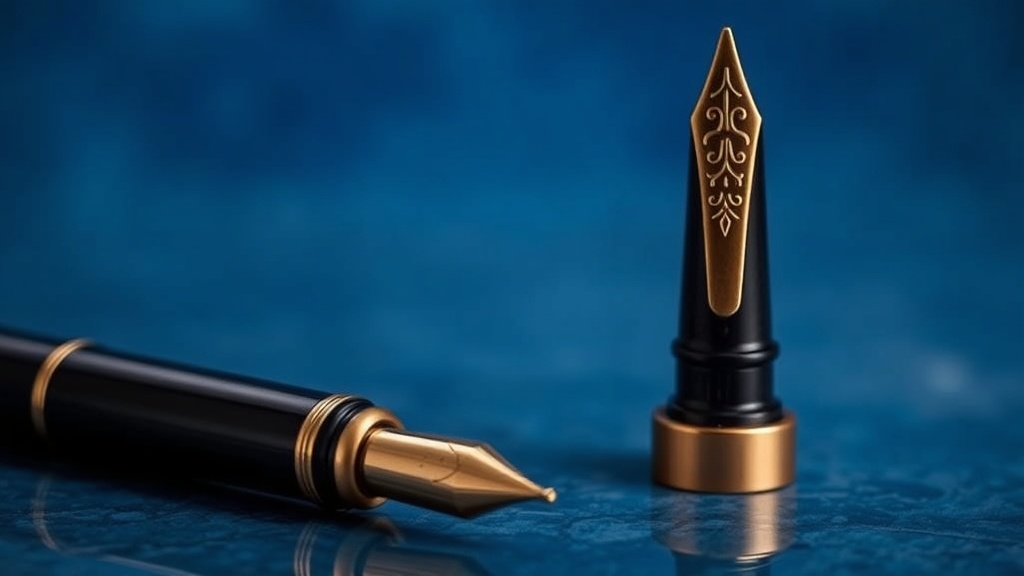
5 Iconic Vintage Fountain Pens Every Serious Collector Should Own

Parker 51: The Pen That Writes Under Water
Montblanc Meisterstück 149: The Diplomat's Choice
Sheaffer Snorkel: Engineering Marvel of the 1950s
Pelikan M400 Souverän: The Striped Classic
Waterman Patrician: Art Deco Elegance
Why These Five Pens Define the Golden Age of Writing
After fifteen years at the drafting table and two decades of rescuing neglected writing instruments from estate sales and dusty attics, I've developed a particular perspective on what makes a vintage fountain pen truly iconic. It isn't just about scarcity or price tags. It's about engineering integrity, historical significance, and that indescribable moment when a well-tuned nib meets paper with perfect feedback.
These five pens represent the pinnacle of fountain pen manufacturing from the 1920s through the 1960s. Each one teaches you something different about ink flow, nib geometry, and the mechanical ingenuity that defined an era when handwriting mattered. If you're serious about building a collection with both historical weight and writing substance, start here.
1. The Parker 51: An Exercise in Functional Perfection
When Parker launched the 51 in 1941, they weren't just releasing a pen—they were solving problems most users didn't know existed. Kenneth Parker's team spent six years in development, and it shows in every mechanical detail.
The hooded nib design wasn't merely aesthetic. By enclosing the nib and feed within a streamlined shell, Parker eliminated the primary cause of ink evaporation and hard starts. The hood acts as a humidity chamber, keeping the feed saturated even after days of disuse. From a restoration standpoint, this design presents unique challenges: the collector must be removed to access the nib assembly, and the shell can become brittle with age.
The Vacumatic filler (in early models) and the later Aerometric system both represent genuine engineering milestones. The Aerometric, introduced in 1948, uses a simple plunger mechanism that creates a vacuum to draw ink into the sac. It's remarkably reliable, and when the plunger seal fails—a common issue after sixty-plus years—the repair involves replacing a simple rubber washer and lubing the mechanism with pure silicone grease.
Collector's Note: Look for the "Jewelers Cap" models with solid sterling silver caps, or the scarce "Empire State" and "CIS" variants. A well-restored 51 with a fine or medium nib writes with a smoothness that modern manufacturers still struggle to replicate.
2. Montblanc Meisterstück 149: The Weight of Tradition
The 149 isn't just Montblanc's flagship—it's arguably the most recognizable fountain pen ever manufactured. Introduced in 1952 (though the line traces back to 1924), the 149 established the oversized cigar-shaped profile that defines luxury pens to this day.
From a technician's perspective, the 149 is a masterclass in piston-filler design. The brass piston mechanism operates with a precision that cheaper imitations never achieve. The two-tone 18k nib—hand-ground in Hamburg—features a distinctive heart-shaped breather hole and ebonite feed that regulate ink flow with remarkable consistency. When restoring these, I often find the piston seals have hardened, but replacement is straightforward if you work carefully with the brass threads.
The celluloid "telescoping" models from the 1950s command the highest prices, but don't overlook the early resin versions from the 1960s and 70s. The resin is practically indestructible, and the nibs from this period often have more character than modern production.
What to Look For: The "spade" ebonite feed on vintage models provides wetter, more generous ink flow than modern plastic feeds. If you're buying unrestored, check for cracks in the section threads—a common failure point that requires professional repair.
3. Pelikan 400NN: German Engineering in Miniature
Pelikan's 400 series, particularly the 400NN (produced from 1956-1968), represents the sweet spot of vintage German pen manufacturing. The differential piston mechanism is a marvel of efficiency: a single turn of the knob draws ink completely through the barrel, with no sac to replace and minimal parts to fail.
The 400NN's striated green celluloid barrel isn't just beautiful—it's functional. The transparency allows you to monitor ink levels, and the material has proven remarkably stable over decades. Unlike some celluloids that shrink or discolor, well-cared-for Pelikan celluloid retains its depth and chatoyance.
The 14k nib units are interchangeable, meaning you can swap a fine for a broad or oblique without tools. This modularity was revolutionary in the 1950s and remains practical today. When these pens arrive in my workshop, the most common issues are hardened piston seals—easily replaced with modern PTFE-coated versions—and dried ink in the feed, which responds well to ultrasonic cleaning.
Restoration Insight: The 400NN's feed is made of ebonite, which can become saturated with ink residue over time. A 24-hour soak in pen flush followed by gentle cleaning with a brass shim restores optimal flow without damaging the feed channels.
4. Sheaffer Lifetime Balance: American Art Deco Excellence
Sheaffer's Balance line, introduced in 1929, broke dramatically from the traditional cylindrical pen shape. The torpedo silhouette wasn't merely decorative—it distributed weight perfectly for extended writing sessions, something I appreciate when testing pens for hours at my workbench.
The "Lifetime" nib was Sheaffer's guarantee of permanence—a 14k gold nib warrantied for the original owner's life. These nibs are typically firm with a hint of spring, offering excellent control for precise writing. The Triumph nib variant, introduced in the early 1940s, wrapped the feed in a conical sheath that eliminated skipping and improved ink flow—a genuine innovation that other manufacturers eventually imitated.
The Vacuum-Fil filler (1940-1948) is a complex plunger system that creates impressive suction but requires careful restoration. The later Touchdown and Snorkel systems are more reliable and easier to service. When restoring Balances, pay special attention to the celluloid: the "Marine Green" and "Carmine" colors are particularly prone to crystallization if stored in unstable environments.
Collector's Advice: The oversized models (5.5 inches capped) offer the best writing experience for adult hands. Look for the "Crest" and "Imperial" variants with gold-filled trim—the craftsmanship in these pens rivals anything produced in Europe during the same period.
5. Waterman 52: The Eyedropper Era's Finest Hour
No serious collection is complete without representation from the eyedropper era, and the Waterman 52 (produced 1915-1920s) is the definitive example. Before lever fillers and sacs became standard, pens held ink directly in the barrel—simple, reliable, and capable of massive capacity.
The 52's hard rubber construction has survived a century remarkably well when properly stored. The material develops a characteristic "chocolate" patina that collectors prize. The 14k Ideal nib is where Waterman truly excelled—the company employed master grinders who created flexible nibs capable of dramatic line variation with minimal pressure.
Restoring a 52 requires different techniques than sac-filler pens. The barrel threads must seal perfectly to prevent leakage, and the feed must be positioned precisely to regulate the free flow of ink from the barrel. I often find these pens with cracked caps or worn threads, but a skilled repair person can address these issues without compromising the pen's integrity.
Writing Experience: A properly tuned Waterman 52 with a flexible nib offers a tactile experience unmatched by modern pens. The line variation from hairline to broad requires technique—this isn't a pen for quick notes, but for deliberate, expressive writing.
Building Your Collection: Practical Guidance
Start with condition and provenance. A pen with original box and papers commands a premium but offers assurance of authenticity. When examining vintage pens, check for:
- Cap fit: Should post securely without wobble
- Barrel integrity: Look for cracks, particularly at threads and clip mounts
- Nib alignment: Tines should meet evenly at the tip
- Filler function: Sac-based pens should compress and expand smoothly
Don't be afraid of pens that need restoration, but understand what you're getting into. A Parker 51 with a hardened sac is a weekend project. A Montblanc 149 with a cracked section requires specialized tools and expertise.
The market for vintage pens has matured significantly in the past decade. Prices for pristine examples of these five models continue to appreciate, but more importantly, they offer something no modern investment can replicate: the connection to a time when craftsmanship and utility were inseparable. When you write with a restored vintage pen, you're not just moving ink across paper—you're participating in a mechanical conversation that spans generations.
"A vintage fountain pen isn't an antique to be displayed—it's a tool to be used. The patina of use adds value that no amount of polishing can replicate."
Choose pens that speak to you, maintain them with care, and they'll outlast every disposable writing instrument in your desk drawer. That's not sentimentality—it's sound engineering.