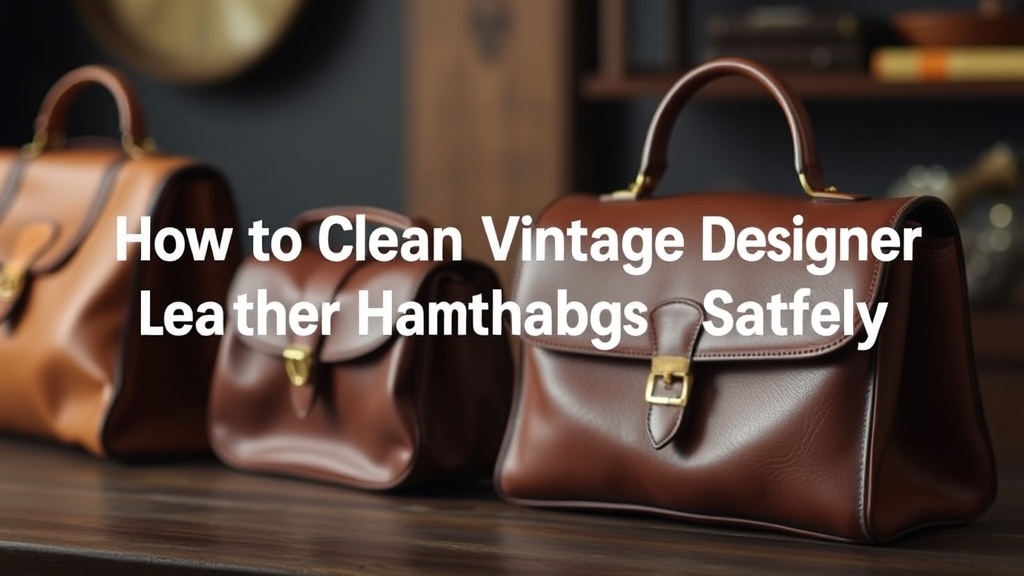
How to Clean Vintage Designer Leather Handbags Safely

Cleaning and Preserving Vintage Designer Leather Handbags
This guide provides a technical framework for cleaning, conditioning, and maintaining vintage designer leather handbags to prevent degradation and preserve resale value. You will learn how to identify different leather types, the specific tools required for safe cleaning, and the step-by-step protocols for treating common issues like surface grime, salt stains, and dryness. Following these precise methods ensures that high-value items—such as vintage Hermès Kelly bags or Gucci Jackie styles—remain structurally sound and aesthetically intact.
Identify Your Leather Type Before Proceeding
Before applying any liquid or solvent, you must identify the specific type of leather and the finish applied to it. Treating a piece of Saffiano leather with the same method used for Nappa leather will result in permanent damage. A mistake in identification can lead to stripped finishes or permanent discoloration.
Smooth and Grained Leathers
Smooth leathers, such as those found on vintage Chanel Flap bags, are often highly susceptible to scratches and moisture. Grained leathers, like Togo or Epsom leather used by Hermès, are more durable and can handle slightly more vigorous cleaning, but they still require a cautious approach to avoid pushing dirt deeper into the grain.
Patent Leather
Patent leather has a high-gloss, plasticized coating. It is remarkably durable against moisture but extremely sensitive to chemical solvents and abrasives. Never use a standard leather conditioner on patent leather, as the oils can cloud the finish or cause the coating to peel.
Suede and Nubuck
Suede and nubuck are highly absorbent and have a "nap" (the fuzzy surface texture). These materials are the most difficult to clean. Traditional liquid cleaners will almost certainly leave permanent water spots on suede. These require dry cleaning methods exclusively.
Essential Tool Kit for Leather Care
Precision in maintenance requires the right implements. Avoid household items like dish soap or generic baby wipes, which often contain alcohol or harsh surfactants that strip natural oils. Assemble the following professional-grade tools:
- Microfiber Cloths: Use high-quality, lint-free cloths. Avoid paper towels, as the wood fibers can act as a micro-abrasive on delicate skins.
- Soft-Bristled Horsehair Brush: Essential for removing surface dust from grained leathers without scratching the surface.
- Distilled Water: Tap water contains minerals (calcium and magnesium) that can leave white residues on the leather over time.
- pH-Neutral Leather Cleaner: Look for specialized products like Saphir Médaille d'Or, which are formulated for high-end luxury goods.
- Leather Conditioner: A high-quality cream or balm designed for the specific leather type you are treating.
- Cotton Swabs (Q-tips): For precision cleaning of corners, stitching, and hardware edges.
The Step-by-Step Cleaning Protocol
Always perform a "spot test" before a full application. Apply a tiny amount of your chosen cleaner to an inconspicuous area, such as the bottom of the bag or the inside of a strap, and wait 24 hours to ensure no discoloration occurs.
Step 1: Dry Debris Removal
Begin by removing loose dust and debris. Use your soft-bristled horsehair brush to gently sweep the surface of the bag. For textured leathers like pebbled calfskin, use circular motions to lift dust out of the grain. If you skip this step, adding moisture in the next step will turn the dust into a muddy slurry that can stain the leather fibers.
Step 2: Targeted Surface Cleaning
Dampen a microfiber cloth with a very small amount of distilled water or a specialized pH-neutral leather cleaner. The cloth should be damp, never dripping. Wring it out thoroughly. Wipe the leather in a single direction or gentle circular motions. Avoid excessive pressure, which can stretch the leather fibers.
For hard-to-reach areas like the seams or where the handle meets the body, use a cotton swab dipped in the cleaner. This allows for surgical precision without saturating the surrounding areas. If you are working on a bag with intricate hardware, be extremely careful not to let the cleaner sit on metal components, as it can cause tarnishing or pitting.
Step 3: Drying and Moisture Management
After cleaning, use a fresh, dry microfiber cloth to blot away any residual moisture. Do not use a hair dryer or place the bag near a radiator to speed up the process. Excessive heat will cause the leather to shrink, crack, and lose its natural oils. Allow the bag to air dry in a cool, well-ventilated room away from direct sunlight.
Step 4: Conditioning the Leather
Once the bag is completely dry, apply a leather conditioner. For smooth leathers, a small amount of cream is usually sufficient. Apply the conditioner to a clean cloth first, rather than directly onto the leather, to control the amount used. Massage the cream into the leather using light, circular motions. This replenishes the lipids lost during the cleaning process and maintains the leather's suppleness.
Wait at least 30 minutes for the conditioner to absorb, then use a clean section of your cloth to buff away any excess. If the leather feels tacky or greasy, you have used too much product. Buff it more thoroughly with a dry cloth.
Handling Specific Issues
Salt Stains
Salt stains are common on vintage bags used in winter months or near coastal areas. To remove them, use a cloth dampened with a solution of one part distilled water to one part white vinegar. The acidity of the vinegar helps neutralize the salt. Work quickly and follow immediately with a water-dampened cloth to remove the vinegar, then proceed to the conditioning step.
Ink Stains
Ink is one of the most difficult substances to remove from leather. If you are dealing with a high-value vintage piece, professional restoration is recommended. If you must attempt it, use a specialized ink remover specifically designed for leather. Never use rubbing alcohol or acetone, as these will dissolve the leather's topcoat and leave a permanent white mark.
Hardware Tarnishing
Vintage designer bags often feature brass or gold-plated hardware. To clean hardware, use a dry microfiber cloth. If there is significant tarnish, use a specialized metal polish applied with a cotton swab, being careful to avoid the leather. If you are concerned about the integrity of the plating, it is safer to leave the hardware alone or use a dry polishing cloth.
Storage and Long-Term Preservation
Cleaning is only half the battle; how you store the item determines its longevity. Proper storage prevents the leather from losing its shape or developing mold.
- Use Dust Bags: Always store your handbag in its original cotton dust bag. Avoid plastic bins or airtight containers, as leather needs to "breathe." Plastic can trap moisture, leading to mold and mildew growth.
- Maintain Shape: Use acid-free tissue paper or specialized bag pillows to stuff the interior of the bag. This prevents creasing and structural collapse, which is particularly important for vintage bags with softer constructions.
- Temperature and Light Control: Store your collection in a cool, dark, and dry environment. Direct sunlight is the enemy of vintage leather; it causes UV degradation, which leads to fading and cracking.
- Avoid Hanging Straps: Do not store bags by their straps (such as shoulder bags or crossbody bags) on a hook. The constant tension can stretch the leather and weaken the attachment points over time. Store them upright on a shelf.
By treating these items with the same precision one would use for a mechanical instrument, you ensure that these pieces of history remain preserved for the next generation of collectors.
Steps
- 1
Dusting with a soft brush
- 2
Testing a small inconspicuous area
- 3
Using a damp, pH-neutral cloth
- 4
Applying a specialized leather conditioner