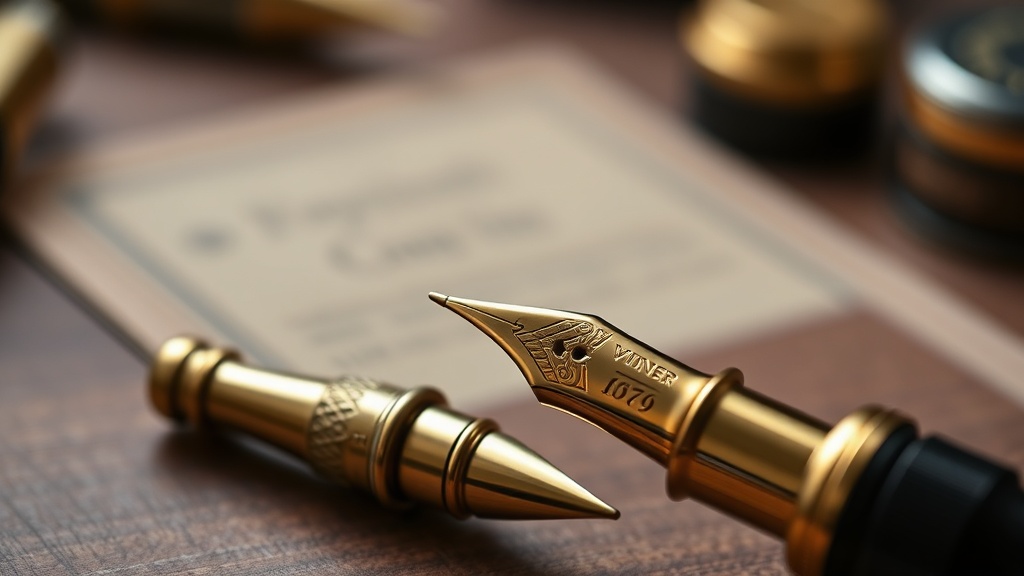
How to Restore Vintage Fountain Pens: A Collector's Complete Guide

This guide covers every stage of vintage fountain pen restoration—from initial assessment and disassembly to nib tuning and final reassembly. Whether you've acquired a battered 1920s Waterman at an estate sale or inherited a drawer full of neglected Sheaffers, the restoration process follows the same methodical principles. Restoring these writing instruments preserves their history while returning them to daily use—a practical way to own and appreciate craftsmanship that simply isn't manufactured anymore.
What Tools Do You Need to Restore Vintage Fountain Pens?
The right tools make all the difference. You don't need a professional workshop—just a few specialized items alongside common household tools.
The Basics
- Pen flush solution — A commercial product like Goulet Pen Flush or a homemade mix of distilled water, ammonia, and dish soap
- Brass shims — Thin sheets (0.001" to 0.003") for cleaning between tines
- Micro-mesh pads — 12,000 grit for polishing nibs without damage
- Silicone grease — Food-grade, for resealing threads and pistons
- Ultrasonic cleaner — The Magnasonic MGUC500 works well for pens (under $40)
Specialized Restoration Tools
Some jobs need specific equipment. A section plier set (with protective rubber jaws) helps remove stubborn sections without cracking barrels. Heat guns—or even a hair dryer on high—soften old shellac and remove section adhesive. For lever-fillers, a j-bar replacement tool or simple hook made from coat hanger wire retrieves broken pressure bars.
Here's the thing: start small. Buy tools as projects demand them. That $80 ultrasonic cleaner isn't necessary for your first three pens.
How Do You Assess a Vintage Fountain Pen Before Restoration?
Never start disassembling until you've thoroughly examined the pen—rushing this step destroys more vintage pens than age ever did.
The Visual Inspection
Hold the pen under good light. Look for hairline cracks in the barrel, especially near the threads. Check the nib for tipping wear, misalignment, or cracks in the iridium. Vintage pens often have brassing—wear revealing the underlying metal on gold-filled clips and bands.
Test the filling mechanism if it's visible. Does the lever move? (Don't force it.) Does the piston knob turn freely? Stiff mechanisms usually mean dried ink or corrosion—both fixable, but both require different approaches.
Identifying Materials
Pre-1920s pens often used hard rubber (vulcanite). Heat these gently—too much warps them permanently. Celluloid pens (1920s–1950s) are beautiful but flammable; never use open flame. Plastic and resin pens from the 1950s onward are generally the most forgiving.
| Material | Era | Restoration Notes |
|---|---|---|
| Hard Rubber (Vulcanite) | Pre-1920s | Oxidizes to brown; use minimal heat; restore color with fine abrasives |
| Celluloid | 1920s–1950s | Never use flame; clean with mild soap; highly polishable |
| Bakelite | 1920s–1940s | Very durable; accepts heat well; clean with alcohol-based solutions |
| Resin/Plastic | 1950s–present | Most forgiving; ultrasonic cleaning safe; modern replacement parts available |
The catch? Some "celluloid" pens are actually casein (milk protein plastic). Casein dissolves in water. Always test an inconspicuous spot with a damp cotton swab before submerging.
What Are the Steps for Cleaning and Disassembling a Vintage Pen?
The cleaning process varies by filling system, but the goal remains constant: remove old ink, sediment, and debris without damaging components.
Disassembly Order
- Remove the cap — Check for inner caps (common in Parker Duofolds and Sheaffer Balance models)
- Extract the nib and feed — Most unscrew counter-clockwise; some (Waterman 52s, for example) pull straight out with gentle heat
- Remove the section from the barrel — Apply heat with a hair dryer for 30–60 seconds, then grip with section pliers and twist
- Extract the filling mechanism — Sac pens need the old hardened rubber removed; pistons may need lubrication
The Soaking Process
Fill a jar with distilled water (tap water minerals leave deposits). Submerge metal parts—nibs, feeds, clips, bands. Let them soak for 24–48 hours, changing the water when it discolors. For pens with heavy ink buildup, add a few drops of ammonia to the water.
That said, never soak celluloid or hard rubber barrels for extended periods. These materials absorb water and warp. Wipe them with a damp cloth only.
Ultrasonic Cleaning
Five minutes in an ultrasonic cleaner removes residue that soaking won't touch. Run metal nibs and feeds separately from plastic components—the vibrations can pit soft materials if they're together. The Fountain Pen Hospital recommends keeping cycles under three minutes for vintage plastics.
How Do You Replace a Fountain Pen Sac or Repair the Filling System?
The sac—the rubber reservoir that holds ink—is the most common failure point in vintage lever-fillers and button-fillers.
Sac Replacement
First, measure the sac width. Slide a sac gauge (or drill bit shank) into the barrel where the sac sits. Most vintage pens use sizes between 16 and 22 (referring to 64ths of an inch). Order silicone or PVC sacs from Pen Tooling or Anderson Pens—they outlast original latex.
Clean the sac nipple (the peg inside the section) with alcohol. Apply sac cement—a specialized rubber adhesive, not Super Glue. Slide the new sac onto the nipple, ensuring it's straight. Dust the sac with talc powder to prevent sticking inside the barrel. Let it cure for 24 hours before filling.
Piston Mechanisms
Piston-fillers like vintage Pelikans or Montblancs rarely need sacs. Instead, the piston seal—a rubber cork or synthetic washer—wears out. The Montblanc 149 uses a cork seal; the Pelikan 400 uses a two-part piston unit. Disassemble from the blind cap end, clean old grease with cotton swabs, apply fresh silicone grease to threads and seal, then reassemble.
Worth noting: some piston units are press-fit and require special tools. If the piston knob won't unscrew with reasonable pressure, stop. You're likely missing a hidden set screw or retaining ring.
How Do You Tune and Smooth a Vintage Nib?
A nib that scratches, skips, or writes too wet ruins the writing experience. Tuning requires patience and a light touch—overworking a nib damages it permanently.
Basic Alignment
Examine the tipping material under magnification. The two tines should meet evenly at the tip. If one tine is lower, gently bend it up using thumbnail pressure against a hard surface. Check often. Tiny adjustments make big differences.
Smoothing
Create a "figure eight" pattern on micro-mesh or a ceramic cup bottom—yes, the unglazed bottom of a coffee mug works. Write figure eights with light pressure, rotating the nib to hit all angles. Test frequently on good paper (Rhodia or Tomoe River). Stop when the nib glides without catching.
If the nib writes too wet, the tines are too far apart. Press them together gently. Too dry? Use brass shims—one, then two—to spread the tines slightly. Always work in increments smaller than you think necessary.
Flex Nibs
Vintage Waterman, Mabie Todd, and Wahl-Eversharp pens often have soft, flexible nibs. These require different tuning. Don't smooth them aggressively—they need slight feedback to control line variation. Check for cracks in the breather hole (the heart-shaped cutout). A cracked flex nib is usually irreparable.
Reassembly and Final Testing
Reassembly is disassembly in reverse, but with fresh materials. Apply silicone grease to all threads—this prevents future seizing and makes the next restoration easier. Test the filling mechanism with water before committing to ink. Water won't stain if there's a leak.
Once everything seals properly, fill with a safe ink—Waterman, Parker Quink, or Pelikan 4001. Avoid shimmering or highly saturated inks (Organic Studios, J. Herbin 1670) until you're confident the pen won't clog.
Write with it. Daily. These pens were made to be used, not displayed in cases. The more you write, the better you'll understand its quirks—and the more satisfaction you'll get from bringing a neglected instrument back to life.
Steps
- 1
Disassemble and Inspect Your Vintage Pen
- 2
Clean the Nib, Feed, and Barrel Thoroughly
- 3
Replace the Ink Sac and Reassemble