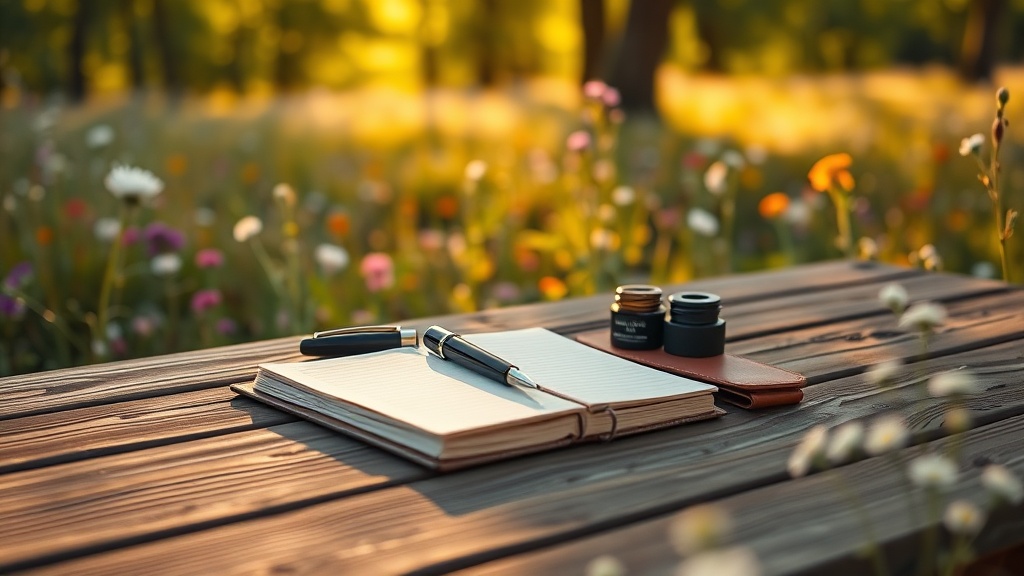
Spring 2026 Outdoor Writing Retreats: Boost Creativity and Longevity with Nature‑Inspired Journaling

Ever felt the ink flow better when the sun is shining? I once set up a simple writing station on a meadow just as the first wildflowers opened, and the words practically leapt onto the page. That spark isn’t a coincidence.
In this post I’ll show you why stepping outside with a fountain pen this spring can do more than inspire beautiful prose – it can actually boost mental clarity, reduce stress, and support long‑term cognitive health.
Why does nature improve our writing and brain health?
Recent expert advice positions outdoor activity as a cornerstone of age‑defying lifestyles in 2026. A systematic review of nature exposure found that even brief (10‑minute) sessions in real natural settings restore cognitive processes, enhance attention, and increase working‑memory capacity.ScienceDirect, 2024 The same mechanisms translate directly to the act of writing: a calmer mind writes clearer, and a relaxed hand guides the nib more smoothly.
What makes a fountain pen the perfect tool for outdoor journaling?
My background as an architectural draftsperson taught me that precision matters. A well‑tuned nib behaves like a finely calibrated instrument – it responds to the subtle pressure of your hand, just as a compass responds to a gentle turn. In the wild, you’ll encounter wind, temperature swings, and occasional dust. A sturdy, well‑maintained pen (think Pilot Metropolitan or Lamy Safari) paired with a quick‑drying ink (e.g., iron‑gall ink) keeps the line clean without smudging.
For a portable kit, I always include:
- Fountain pen – a reliable, refillable model with a smooth nib.
- Leather‑bound journal – thick enough to handle ink without bleed‑through.
- Mini ink bottle – sealed to prevent leaks; a few drops go a long way.
- Compact blotter – a small piece of blotting paper to dry the nib after each session.
- Protective case – a water‑resistant pouch for the whole ensemble.
These items fit into a standard backpack or even a messenger bag, so you can wander from a city park to a forest clearing without missing a beat.
How do I set up a Spring 2026 outdoor writing retreat?
Here’s a step‑by‑step guide that blends my technical know‑how with the latest longevity research.
- Pick a location with gentle shade. Direct sunlight can dry ink too fast; a spot under a tree or a light‑fabric canopy offers a balanced light level.
- Check the weather forecast. Aim for temperatures between 15‑22 °C (60‑72 °F) – ideal for both your hands and the ink flow.
- Lay out a portable writing surface. A lightweight wooden picnic table or a fold‑out lap desk provides stability for your nib.
- Prepare your pen. Clean the nib, fill the ink bottle, and test a few strokes on a scrap sheet to ensure flow.
- Start with a grounding exercise. Take three deep breaths, observe the surrounding sounds, then begin journaling. This primes the brain for the restorative effect of nature.
- Write in short bursts. Research shows 20‑minute focused sessions maximize cognitive benefits without fatigue.Tandfonline, 2025
- Close with a reflection. Note any changes in mood, focus, or physical sensations. Over time, you’ll see patterns that guide future retreats.
What are the longevity benefits of regular nature‑based journaling?
Long‑term cognitive health hinges on two pillars: mental stimulation and stress reduction. Outdoor journaling hits both. A 2024 meta‑analysis linked regular nature exposure to lower cortisol levels, improved neuroplasticity, and a reduced risk of age‑related cognitive decline.NCBI, 2024 By pairing that exposure with the tactile feedback of a fountain pen, you add a fine‑motor skill component that further engages the brain.
Where can I find inspiration for my outdoor writing sessions?
Look no further than the world around you. Spring’s blooming flora, the subtle shift of light, and the chorus of birds all serve as prompts. Here are a few ideas:
- Describe the texture of a leaf in terms of ink flow.
- Write a short story that starts with the sound of a distant stream.
- Sketch a quick map of your favorite walking path, then annotate it with thoughts.
If you need a quick creative spark, check out my Spring Digital Detox post – it outlines how unplugging amplifies the benefits of outdoor writing.
How do I keep my kit safe and functional throughout the season?
Maintenance is key. After each retreat, rinse the nib with distilled water, dry it gently, and store the pen upright in its case. Refill the ink bottle only when it’s half empty to avoid air bubbles. For the journal, keep it in a breathable sleeve to prevent moisture buildup.
For a deeper dive into pen care, see my Weekly Fountain Pen Cleaning Routine guide.
Takeaway
Spring 2026 offers the perfect backdrop for a nature‑infused writing practice. By packing a reliable fountain‑pen kit, following a simple setup routine, and embracing the mental benefits of outdoor exposure, you’ll sharpen your prose, lower stress, and give your brain a longevity boost. So grab your pen, step outside, and let the season write its story alongside you.