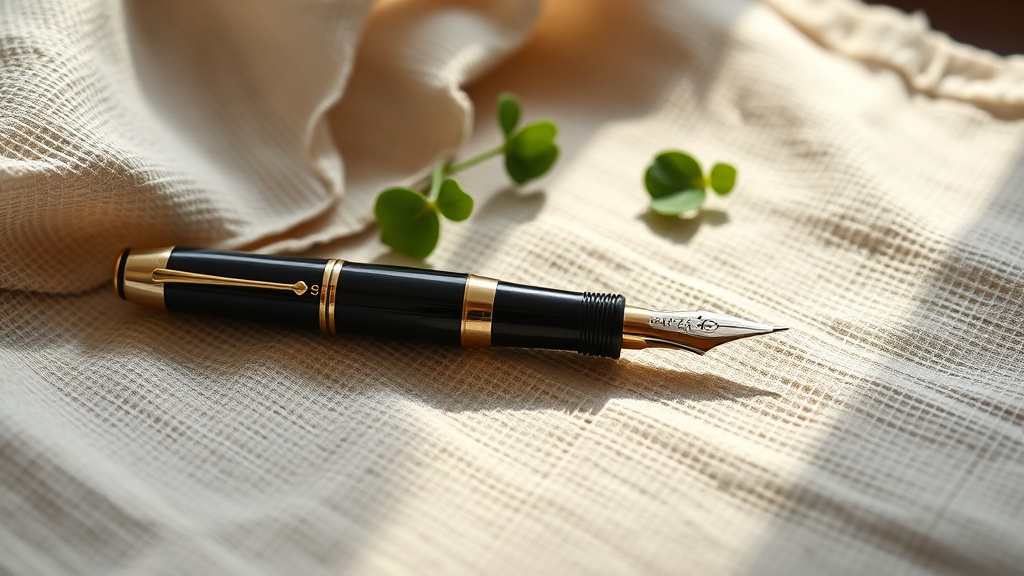
St. Patrick’s Day 2026: Preserving Irish Writing Traditions with Fountain Pens

Ever wondered why a simple pen can feel like a cultural artifact on St. Patrick’s Day? While most of us reach for a green shirt or a pint of stout, the true spirit of Irish heritage lives in the ink‑stained pages of centuries‑old manuscripts. This March, let’s explore how fountain pens can help us preserve and celebrate that legacy.
Why does Irish writing matter on St. Patrick’s Day?
Irish script isn’t just decorative lettering; it’s a record of a nation’s oral traditions, myths, and history. From the illuminated Book of Kells to the humble letters of 19th‑century emigrants, the act of writing has been a means of cultural survival. On St. Patrick’s Day, honoring that lineage means more than parades—it means keeping the ink flowing.
What historic Irish inks can I use today?
Traditional Irish inks were often made from iron gall—a mixture of tannic acid (from oak galls) and iron salts. The Iron Gall Equation explains how this recipe yields a deep, archival black that resists fading. Modern makers like Diamine’s Ancient Copper echo those historic formulas, offering a copper‑toned ink that feels like a nod to the past while staying safe for today’s pens.
Which paper best showcases Celtic script?
When I’m trying to emulate the texture of medieval vellum, I turn to high‑gsm, low‑absorbency papers. Tomoe River 52 gsm is a favorite for its feather‑light feel, but for a true Irish‑style experience, I recommend a slightly heavier, slightly textured paper like Rhodia’s premium ivory. Its surface allows the ink to sit on top, mimicking the luminous quality of illuminated manuscripts.
Which fountain pens feel most like an Irish scribe’s tool?
While many pens can deliver smooth lines, a few stand out for their historic character. The Pilot Kakuno, with its simple nib and modest price, reminds me of the affordable pens used by Irish schoolchildren in the early 20th century. For a more tactile, brass‑filled experience, the Lamy 2000’s stainless steel body echoes the durability of the pens that survived the Great Famine’s hardships.
How can I incorporate Irish motifs into my writing practice?
Try drafting a short poem or a line of Gaelic each day leading up to March 17. Use a subtle green ink—perhaps a diluted Emerald Ink from Joann’s green ink collection—to underline the words. Pair it with a tiny sprig of clover tucked into the notebook’s binding for a tactile reminder of the day’s heritage.
What community events let me share this pen‑based celebration?
Many local Irish cultural centers host “Pen & Paper” evenings where participants write letters in Gaelic or transcribe folk tales. Check your city’s Irish heritage society calendar or the Official Ireland tourism site for upcoming workshops. Bringing your own fountain pen adds a personal, analog touch that digital devices can’t replicate.
Takeaway
St. Patrick’s Day is the perfect excuse to honor not just the green hills of Ireland but the ink‑stained pages that kept its stories alive. By choosing historic‑inspired inks, textured paper, and pens that echo past craftsmanship, you become part of a living tradition. Grab your favorite fountain pen, dip into a copper‑toned ink, and write a line of Irish heritage—your scribbles are the next chapter in a centuries‑old story.