Stop Hype-Washing IWD: Real Women in Tech Innovations

Every year around early March, my social feeds turn into a sea of corporate pink graphics. It's the same song and dance: "Women in Tech!" accompanied by illustrations of VR headsets, floating code, and nebulous AI clouds. Yesterday, I saw Maya Kulkarni's *Feminist Focus* post on my feed calling out this exact aesthetic—the anti-pink-graphic, look-at-your-board-composition take. It resonated with me instantly.
We've fundamentally misunderstood what "technology" and "innovation" actually mean, and in the process, we're erasing the women doing the hardest engineering work.
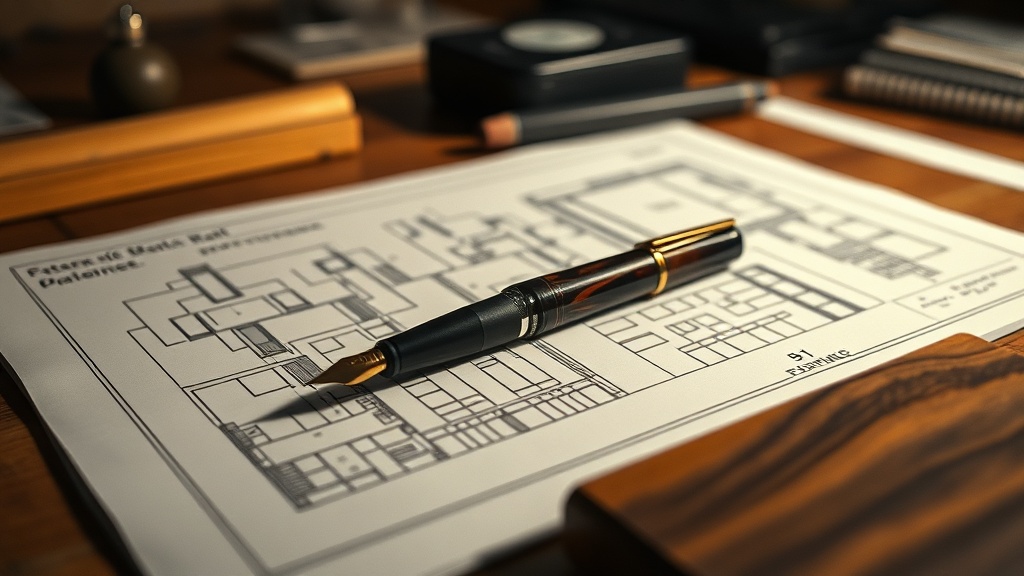
I spent fifteen years at a drafting table. When the firm went entirely digital, I walked. I couldn't stomach the sterile click-clack of a mouse replacing the tactile, deliberate scritch-scratch of a well-tuned nib on paper. But it wasn't just about the sound; it was about the permanence. When I left the architecture world to spend my days pulling thirty-year-old dried ink out of Parker 51 aerometrics, I realized something: the tech industry has sold us a lie about sustainability.
They tell us the newest "eco-branded" smartwatch or AI assistant is the peak of sustainable tech innovation. But a device built with planned obsolescence that bricks itself in thirty-six months isn't sustainable. You know what's sustainable? A tool that you can repair, maintain, and hand down for eighty years.
This International Women's Day, I'm exhausted by the AI hype-washing. If we want to celebrate women in tech innovations, we need to look past Silicon Valley and look at the drafting tables, the lathes, and the chemistry labs.
We need to look at the female materials scientists who are currently engineering non-petroleum bio-resins for modern fountain pen turning—materials that mimic the warmth and durability of vintage celluloid without the catastrophic flammability or environmental toll.
We need to look at the industrial designers figuring out how to machine ebonite to tolerances of a fraction of a millimeter, ensuring a nib and feed mate so perfectly that capillary action works flawlessly for decades. Capillary action is physics. It's fluid dynamics. It's real engineering.
Historically, this has always been true. During the mid-century peak of fountain pen manufacturing, it was largely women who assembled, tuned, and tested the precision components of the very Parker 51s I restore today. Their hands built the most reliable writing tech of the 20th century. Today, it’s women who are pioneering the zero-waste manufacturing processes in analog tools, proving that the true "green tech revolution" doesn't require a server farm.
True sustainability is intention. It’s choosing a tool that doesn't need a software update to function. It's a refillable reservoir. It's a nib that adapts to your hand over a lifetime.
So, let the tech conglomerates have their pink graphics and their AI buzzwords. I'll be at my bench, with a permanent ink stain on my right middle finger and a loupe around my neck, celebrating the women who engineer the kind of technology that actually lasts.