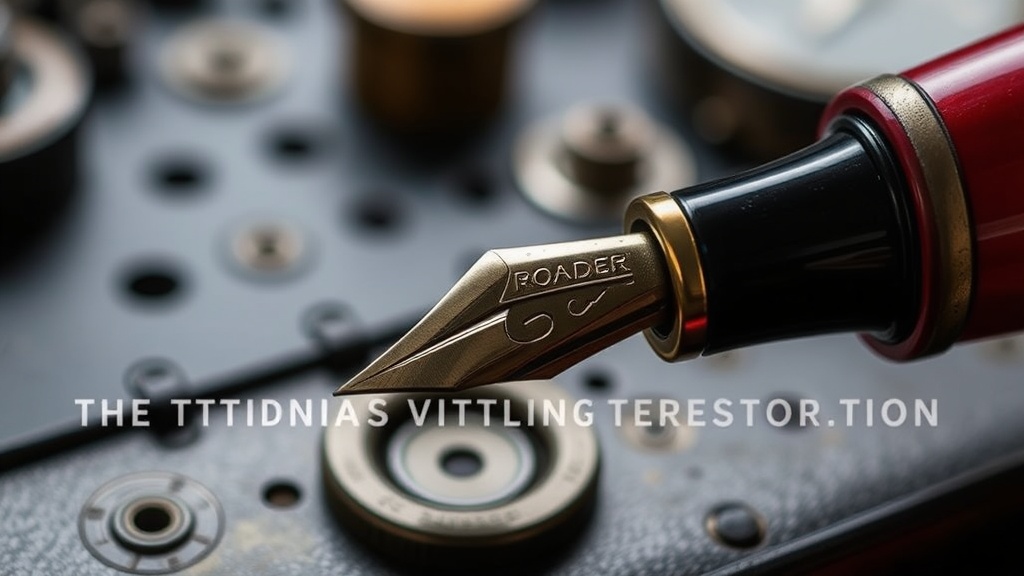
The Mechanics of Vintage Fountain Pen Restoration

You will learn the technical nuances of identifying, cleaning, and restoring vintage fountain pens, specifically focusing on the mechanical integrity of ebonite feeds and the structural stability of celluloid barrels. This guide explores the specific tools and methods required to bring a neglected, dried-out instrument back to functional-grade performance.
When a vintage pen sits in a drawer for decades, it doesn't just collect dust; it undergoes chemical and structural changes. For a restorer, the first step isn't cleaning—it's an assessment of the material integrity. Whether you're dealing with a hard rubber (ebonite) feed or a celluloid barrel, the chemistry of what you use to clean it matters more than the brand of the pen itself. If you use a harsh surfactant on an ebonite feed, you might find the material becomes brittle or develops a permanent discoloration that no amount of polishing can fix.
How do I safely clean a dried-out vintage fountain pen?
The most common mistake is jumping straight to high-pressure flushing. If a pen hasn't seen ink in twenty years, the dried ink residue has likely hardened into a solid, crystalline mass inside the feed. Instead of forcing water through it, which can crack even the strongest seals, start with a controlled soak. A lukewarm bath of distilled water is your best friend here. Avoid tap water—the minerals and chlorine can react with the delicate components of a vintage mechanism. If the ink is particularly stubborn, a very dilute solution of pH-neutral soap might help, but never use anything with an abrasive scent or high acidity.
During this process, you're looking for the physical state of the ebonite. Ebonite is a vulcanized rubber, and over time, it can oxidize, turning from a deep black to a dull, brownish hue. This isn't just an aesthetic issue; it affects the capillary action of the ink. If the feed is clogged with dried pigment, you might need to use a specialized dropper to apply small amounts of solvent—specifically, a solution of distilled water and a tiny amount of isopropyl alcohol—to break down the blockage without harming the surrounding materials. But be careful—too much alcohol can strip the oils from the rubber, leaving it parched and prone to cracking.
What tools are needed for nib tuning and alignment?
Precision is the difference between a pen that writes and a pen that performs. To adjust a nib, you need more than just a steady hand; you need a specific set of diagnostic tools. A high-quality jeweler's loupe (at least 10x magnification) is non-negotiable. You need to see the tine-to-tine gap and the slit profile with absolute clarity. If the tines are uneven or the slit is too wide, the ink flow will be inconsistent—a frustrating experience for any user.
For the actual tuning, a micrometer-grade feel is required. You'll likely use a brass shim or a very fine piece of jeweler's brass to gently nudge the tines into alignment. This isn't a task for brute force. Think of it like adjusting a fine instrument. If you press too hard, you risk permanent deformation of the metal. I often recommend checking the work against a specialized nib adjustment resource to ensure the geometry of the tipping material remains consistent with the original design intent. The goal is a smooth, consistent contact point that manages the ink-to-paper ratio without hesitation.
Beyond the nib, you'll need:
- Microfiber cloths: For removing oils from the barrel without scratching.
- Ultrasonic cleaners: These are excellent for cleaning the hard-to-reach crevices of a disassembled section, but use them with caution on vintage pieces.
- Precision tweezers: For handling delicate parts without leaving scratches.
- Distilled water: The only safe liquid for a deep soak.
Can a damaged celluloid barrel be repaired?
Celluloid is a beautiful, temperamental material. It's prone to shrinkage and even "celluloid rot" if stored in high-humidity environments or exposed to certain chemicals. If you find a pen with a cracked or shrunk barrel, the repair is far more complex than a simple cleaning. Unlike modern resins, celluloid is highly flammable and reacts strongly to temperature changes. If you're attempting to repair a crack, you might use a specialized adhesive, but the application must be microscopic. A single drop too many can ruin the fit of the cap or the section.
When a barrel shrinks, the internal diameter changes. This can cause the piston or the bladder to no longer fit quite right. In these cases, you aren't just a restorer; you're a precision engineer. You may need to fabricate new parts or adjust the existing ones to ensure a perfect seal. This level of work requires patience and a deep understanding of how these materials behave over a century. I often look to resources like The Museum of Writing to research the historical context of certain materials, which helps in understanding how they were originally manufactured and how they might react to modern treatments.
If you are working on a piece that has significant structural issues, it is often better to document the current state rather than rushing to fix it. A well-documented piece of history is worth more than a poorly repaired one. If the material is crumbling, a full replacement of the section might be the only path forward. This is the reality of high-end collectible restoration: it's a balance of preservation and functionality. You want the pen to work, but you never want to sacrifice the soul of the object in the process.
The tactile sensation of a perfectly tuned nib hitting the page is a reward for all the meticulous, often invisible work done during the restoration. When the ink flows smoothly and the weight of the pen feels balanced, you know you've succeeded. It's about more than just a tool; it's about honoring the craftsmanship of the past while ensuring it remains a part of the future.