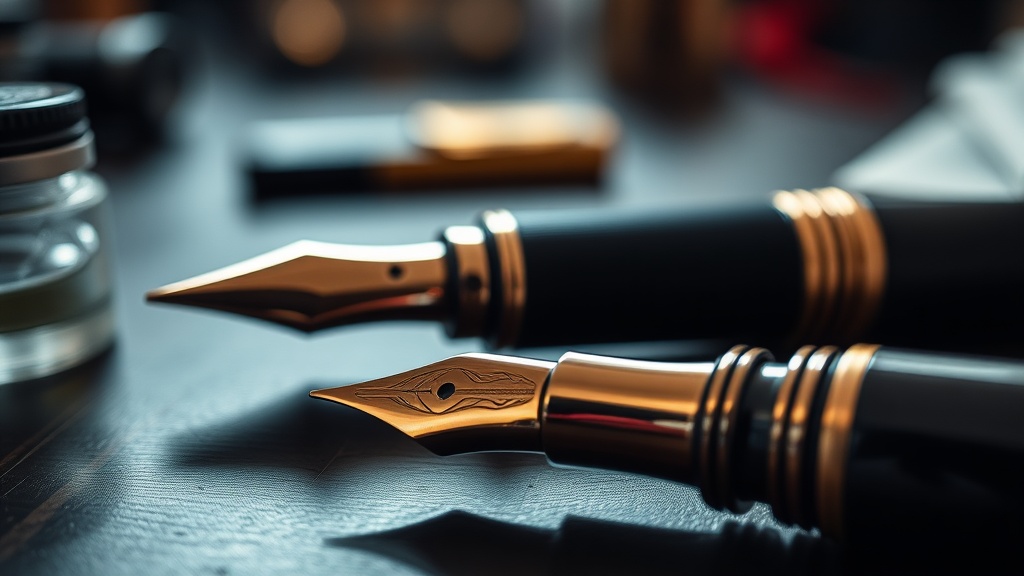
Where Should You Store Your Fountain Pens to Prevent Ink Damage and Corrosion?

This guide breaks down seven practical storage solutions that protect your fountain pens from ink degradation, rubber sac deterioration, and environmental corrosion—whether you own three vintage Esterbrooks or thirty. The wrong storage choice can turn a pristine 1950s Parker Vacumatic into a corroded shell within months, but the right setup preserves both function and value for decades. Temperature, humidity, light exposure, and physical contact all factor into the equation. You spent years hunting down that perfect flex-nib Waterman or that pristine Sheaffer Lifetime—don't let poor storage undo your investment.
1. Climate-Controlled Cabinets: Do You Really Need Temperature Regulation?
Vintage fountain pens with latex sacs or cork seals don't handle temperature swings well. When mercury climbs past 75°F, those rubber components harden and crack. Cold snaps below 50°F make latex brittle. A small wine cooler or cigar humidor—set between 65-70°F with 45-55% humidity—creates the stable environment these instruments demand. You're not storing wine; you're preventing the slow death of irreplaceable 1940s diaphragm seals. Richard Binder's restoration guides note that temperature fluctuations cause more pen damage than actual writing wear.
The investment makes sense once you understand material science. Celluloid, that beautiful early plastic, releases camphor as it ages. Heat accelerates this off-gassing, making the material shrink and crack. Hard rubber (ebonite) oxidizes faster in warm, humid conditions—that's why you see brown "browning" on black pens from the 1920s. A $200 climate-controlled cabinet protects thousands of dollars in vintage inventory. Small digital hygrometers cost under $15 and let you monitor conditions without opening the case.
2. Leather Pen Cases: Are They Safe for Daily Carry?
Quality leather cases with individual slots protect pens from knocking against each other, but there's a catch. Cheap dyed leather bleeds color when humidity hits, staining pearl acrylics and cream celluloid. Stick to vegetable-tanned or untreated leather. The slots should grip firmly—not squeeze—allowing you to extract a pen without pulling the section loose from the barrel. For collectors rotating through a dozen daily writers, a twelve-slot case beats tossing pens loose into a desk drawer where clips scratch barrels and caps work themselves loose.
Consider the closure mechanism. Zippered cases trap moisture; fold-over or snap closures breathe better. Some collectors add small silica gel packets inside cases, replacing them monthly. If you commute with pens, look for rigid-sided cases that prevent crushing when the bag gets bumped. Leather quality varies dramatically. Full-grain leather develops a patina and breathes naturally, while bonded leather traps moisture against pen barrels. Watch for metal rivets or snaps inside cases—they rub against clips and leave scratches.
3. Wall-Mounted Display Cases: Can Sunlight Actually Destroy Your Collection?
Direct sunlight attacks fountain pens on two fronts. UV radiation fades hard rubber and celluloid, turning vibrant jade green into sickly olive within months. Heat buildup inside glass cases accelerates ink evaporation and dries out piston seals. If you're displaying pens—especially rare patterns like the Sheaffer Balance Carmine Red—invest in UV-blocking acrylic or keep cases away from windows. Museum glass cuts 99% of UV rays but costs significantly more than standard framing glass. The Fountain Pen Network community has documented multiple cases of irreversible fading from south-facing display installations.
Beyond light, consider air circulation. Sealed display cases trap humidity from the pens themselves—metal parts tarnish, celluloid sweats. Install small vents or open the case weekly. For serious collectors, display cases with built-in LED lighting solve both problems: no UV emission and minimal heat. Mount lights outside the case shining in, rather than inside where heat concentrates.
4. Original Factory Boxes: Should You Keep Them?
Those cardboard boxes and velvet-lined cases that came with your 1960s Pelikan or 1970s Montblanc aren't just packaging—they're provenance documentation. Collectors pay premiums for pens with matching boxes. Store the boxes separately from the pens to avoid acid migration from aging cardboard, but don't discard them. Acid-free tissue paper inside factory boxes absorbs moisture and prevents metal trim from tarnishing. For modern limited editions, the box often contains warranty cards and certificates that establish authenticity.
Vintage box restoration is its own niche. Collectors use archival-quality adhesives to reattach loose corners and replace deteriorated foam with acid-free alternatives. Never store rubber sac pens in airtight plastic within boxes—trapped air grows stale and accelerates latex oxidation. If you display pens in their original boxes, open the boxes monthly to check for condensation or mold. The market proves this point consistently. A Parker 51 in aerometric filler with its original box commands 15-20% more at auction than the identical pen without packaging.
5. Desk Trays and Stands: What's the Best Orientation?
Gravity matters. Store pens horizontally or nib-up to keep ink settled in the reservoir. Nib-down storage causes ink to pool against the feed, creating hard starts and potential leakage. Wood desk trays with individual cradles work well for active rotation pens—those six to eight instruments you reach for throughout the week. Avoid metal mesh organizers; they scratch precious resin and can react with certain materials. Cork-lined slots cushion clips and prevent rolling. When you set a pen down, cap facing up prevents accidental drops from height.
The material of the tray itself matters. Oak contains tannins that stain light-colored pens over years of contact. Maple and walnut are safer choices. Felt lining seems protective but collects dust that scratches when pens move. Velvet or microfiber works better. For stands that display single pens—like those wooden holders shaped like hands—ensure the grip area doesn't clamp the barrel too tightly. Stress cracks develop at pressure points.
6. Safe Deposit Boxes: Are They Necessary for High-Value Pieces?
Insurers often require safe deposit storage for collections valued above $25,000. Beyond theft protection, bank vaults offer stable temperature and humidity—usually cooler than residential spaces. The downside? Access. You can't admire a Parker Snake Skin or Montblanc Hemingway locked in a vault. Many serious collectors follow the 80/20 rule: keep 80% of value in the bank, 20% accessible for enjoyment. Before storing, flush pens completely and remove all ink. Dried ink residue causes more damage than empty barrels over long storage periods.
Bank storage introduces its own risks. Vaults flood. Banks close. Document everything with photographs and keep an inventory separate from the box itself. Use acid-free boxes within the safe deposit box—metal walls can condense moisture during temperature fluctuations. Check on stored pens annually, not just for condition but because you might have forgotten what you own. That Waterman Patrician you tucked away in 2015 might have doubled in value.
7. Humidity-Controlled Drawers: How Do You Protect Pens in Standard Furniture?
Not everyone has space for specialized storage. Standard dresser drawers work fine with modifications. Line drawers with acid-free craft foam to prevent rolling. Add silica gel packets—rechargeable ones that change color when saturated—to control moisture. Cedar drawer liners repel insects that nibble on casein plastics (common in 1930s pens), but cedar oils can react with some resins. Test first with an inexpensive pen. Check stored pens quarterly for ink leaks, sac deterioration, or cap threads that have seized from disuse. The JetPens storage guide recommends rotating pens every three months to keep piston seals lubricated.
Create zones within drawers. Group pens by filling mechanism: eyedroppers together, piston-fillers separate, cartridge pens in their own section. This prevents cross-contamination if one leaks. Never store pens touching metal objects—paperclips, loose change, keychains. The scratches don't buff out of vintage celluloid. For drawers in bathrooms or kitchens (humidity nightmares), find another location. Steam from showers destroys pens faster than almost anything else. Drawer placement within your home matters as much as the drawer contents. Upper floors experience greater temperature swings than ground floors. Choose interior rooms on lower floors for storage—closets in central hallways work beautifully.