Why Certain Vintage Fountain Pen Brands Hold Their Value

Is a vintage fountain pen a good investment for your collection?
You've likely seen them in estate sales or high-end auctions—those gleaming, heavy-bodied pens that seem to command a premium price regardless of their condition. But why does one 1940s celluloid pen fetch hundreds of dollars while another similar-looking model sells for a fraction of that? Understanding the distinction between a mere writing instrument and a true collector's piece requires looking past the gold nib. It's about the lineage, the material science, and the historical significance of the manufacturing era. When you're hunting for pieces that will appreciate or at least hold their value, you're not just looking for a tool; you're looking for a specific moment in design history.
The market for high-end writing instruments isn't driven by utility. If it were, everyone would be writing with a modern, mass-produced fountain pen. Instead, collectors are driven by the scarcity of specific materials and the reputation of certain manufacturers. A well-maintained Parker or Montblanc from a specific era carries a weight of prestige that modern counterparts simply can't replicate. This isn't about the ink flowing smoothly—though that's a nice perk—it's about the historical footprint left by the brand during its peak years.
What makes certain fountain pen materials more desirable?
In my years spent looking at the mechanical precision of these pens, I've realized that the body material is often the biggest factor in value. We aren't just talking about plastic. We're talking about Ebonite, Celluloid, and even precious resins. Take, for example, the transition from hard rubber to celluloid. Celluloid allowed for a vibrant explosion of colors and patterns that revolutionized the way pens looked. A vintage celluloid pen with a rare, marbled pattern is often much more sought after than a standard black resin model.
When you're inspecting a piece, look closely at the grain and the way light passes through the barrel. High-quality materials like the ebonite used in early 20th-century pens have a certain weight and tactile density that modern plastics lack. If you're looking for more technical data on the evolution of these materials, the Museum of Modern Design offers wonderful insights into how industrial materials changed the aesthetic of everyday objects. A pen isn't just a vessel for ink; it's a sculptural object made of specialized materials that are increasingly difficult to source today.
The Role of Nib Gold and Manufacturing Precision
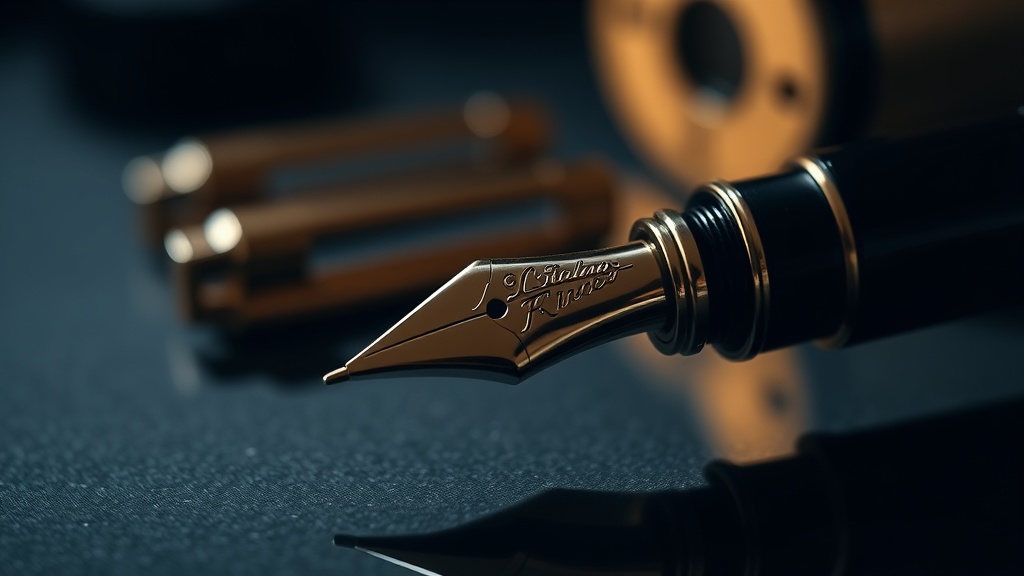
The nib is the heart of the pen, and it's often where the value is most visible. A 14k or 18k gold nib isn't just a luxury—it's a functional choice that prevents corrosion and allows for a more consistent ink flow. However, collectors look for more than just the karat count. They look for the way the nib was shaped and the level of craftsmanship in the tipping material. A hand-ground nib from a legendary era can be worth significantly more than a factory-standard one.
Consider these three factors when assessing a nib's value:
- The Tipping Material: Is it iridium or a modern alloy?
- The Flex: Does the nib offer a responsive, springy feel that is characteristic of vintage craftsmanship?
- The Branding: A nib etched with a recognizable brand name like Waterman or Sheaffer carries much more weight in the secondary market.
If you want to understand the metallurgical standards of different eras, checking the archives at Britannica can provide a solid foundation for understanding how precious metal use has evolved in manufacturing. A well-preserved, flexible gold nib is a rare find that can turn a standard vintage pen into a standout piece of your collection.
How do you identify a high-value vintage pen?
It's easy to get overwhelmed when you see hundreds of pens in a single display case. To avoid being misled, you need to develop a keen eye for detail. Start with the weight. A high-quality vintage pen usually feels substantial in the hand. If it feels light and hollow, it's likely a lower-tier model or a modern reproduction. Next, look at the consistency of the finish. Are there micro-scratches or deep gouges that suggest poor care? A collector's piece should show signs of age, but not signs of neglect.
Check the hardware. The clips, the rings, and the cap bands should be made of high-quality metals—often gold-filled or plated brass. If the plating is peeling or the metal looks thin, the value drops significantly. I always recommend using a jeweler's loupe to inspect the nib and the feed. The feed—the part that regulates ink flow—is often overlooked, but a well-shaped feed is a sign of a high-end instrument. If the feed looks poorly molded or asymmetrical, the pen's performance and value will likely suffer.
A quick checklist for your next find:
- Check the Material: Is it celluloid, ebonite, or a high-grade resin?
- Inspect the Nib: Is it gold? Is the branding clear? Is the tipping intact?
- Evaluate the Hardware: Are the clips and bands securely attached and well-plated?
- Verify the Brand: Does the manufacturer have a historical reputation for quality?
Don't forget to check the internal mechanisms. If you can, see if the piston or lever filler is functional. A pen that doesn't hold ink is just a beautiful piece of sculpture, but a pen that writes perfectly is a living piece of history. Finding a piece that is both aesthetically striking and mechanically sound is the true goal of any serious collector.