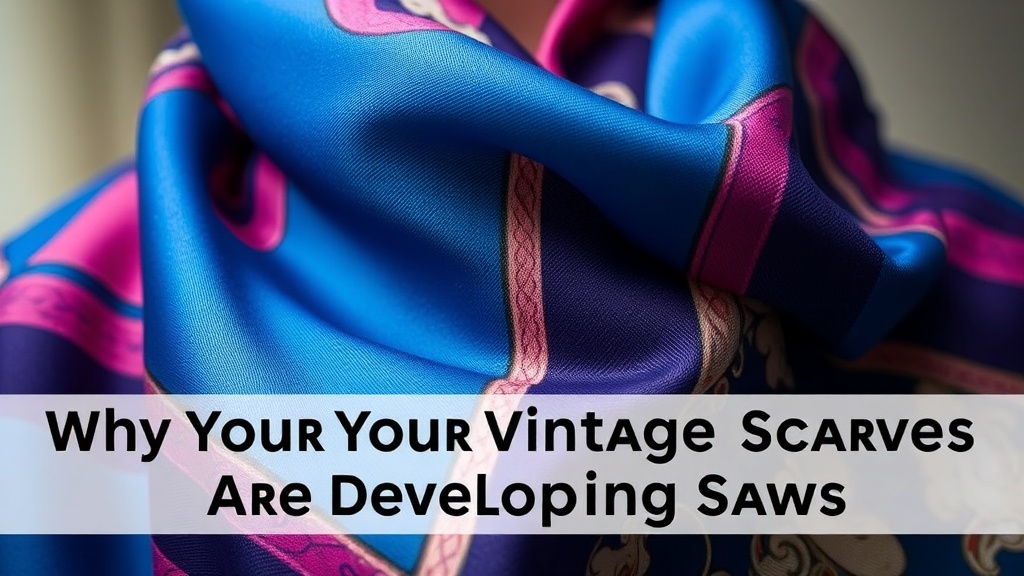
Why Your Vintage Designer Silk Scarves Are Developing Snags

The Misconception of Fabric Fragility
Many collectors believe that snags in vintage silk scarves are an inevitable sign of aging or a direct result of the silk's natural degradation. This is a misconception. While silk is a protein fiber that can become brittle over decades, a snag is rarely a sign of the fabric itself "dying." Instead, a snag is almost always a mechanical failure caused by external physical interference. Understanding the distinction between fiber degradation and mechanical snagging is critical for preserving the value of Hermès, Gucci, or Ferragamo silk pieces. This post examines the precise physical causes of snags and how to mitigate them through proper storage and handling.
The Physics of the Snag
A snag occurs when a single filament of silk thread is pulled out of the weave structure of the fabric. Unlike a tear, which involves a break in the continuity of the fibers, a snag is a displacement. The thread remains intact but is pulled through the interstitial spaces of the warp and weft. This creates a loop of fabric that sits atop the surface of the scarf. If left unaddressed, this loop can be caught again, eventually leading to fraying along the edges or a complete structural failure of the weave.
The primary culprits behind these displacements fall into three categories: jewelry, textured clothing, and improper storage hardware. Because silk—specifically silk twill or crepe de chine—has a specific tension within its weave, any sharp or high-friction object can easily bypass the surface and hook into a thread.
Jewelry and Sharp Edings
The most common cause of immediate snagging is contact with jewelry. High-end vintage pieces often feature intricate settings that are not as smooth as modern, mass-produced jewelry. Consider a vintage Cartier Love bracelet or a ring with a raised bezel setting. The microscopic imperfections in the metal, or even a tiny "burr" on a prong, act as a hook. When the silk passes under these edges, the tension of the fabric pulls the thread upward, creating a permanent loop.
Actionable Tip: Before wearing a vintage silk scarf, run your finger over your jewelry. If you feel any sharp edges or uneven surfaces, do not wear that specific piece with silk. Pay particular attention to vintage brooches or heavy statement necklaces, which exert more downward pressure on the fabric, increasing the likelihood of a snag.
Textured Textiles and Friction
The interaction between different fabric types is a major factor in silk preservation. A silk scarf worn against a heavy wool coat or a textured tweed blazer is at high risk. The microscopic "hooks" found in wool fibers and the coarse texture of heavy weaves can easily catch the fine filaments of a silk twill. This is particularly prevalent with vintage Chanel-style bouclé jackets, where the irregular surface of the fabric creates constant micro-friction against the silk scarf.
If you are layering your wardrobe, ensure there is a smooth barrier between the silk and the textured garment. A smooth silk slip or a high-quality satin lining in a coat can act as a buffer, reducing the mechanical interaction that leads to snags.
The Role of Storage Hardware
Often, the damage occurs when the scarf is not being worn, but rather when it is being stored. Many collectors use decorative hangers or clips to display their collections. If these clips are made of metal with sharp edges or if they have a high-tension spring mechanism, they can easily catch the silk during the process of hanging or removing the scarf.
Furthermore, storing silk scarves in proximity to other items in a crowded drawer or a vintage wooden chest can lead to "accidental snags." If a scarf is folded loosely and placed near a piece of vintage jewelry or a metal watch, the movement of the drawer can cause the silk to snag on the harder object. This is a form of mechanical stress that occurs during routine maintenance rather than active wear.
Proper Storage Protocols
To prevent snags during storage, follow these technical guidelines:
- Use Acid-Free Tissue Paper: When folding scarves for long-term storage, place a sheet of acid-free, archival-quality tissue paper between each fold. This provides a smooth, non-abrasive buffer that prevents the silk from rubbing against itself or other items.
- Avoid Metal Hangers: If you must hang your scarves, use padded silk-wrapped hangers or wide, smooth plastic hangers. Avoid wire or thin metal hangers, as the concentrated pressure points can distort the weave.
- Individualized Storage: The safest way to store high-value vintage silk is in individual, breathable cotton pouches. This isolates the scarf from the friction of other textiles and the sharp edges of jewelry or hardware in your collection.
How to Address an Existing Snag
If you discover a snag, the immediate instinct is often to pull the loop tight to "hide" it. Never do this. Pulling the loop tight does not make the snag disappear; it merely transfers the tension to another part of the weave, often causing a "run" or a hole elsewhere in the fabric. Treating a snag requires a delicate, mechanical approach rather than a forceful one.
The Needle and Thread Technique
To fix a snag, you must move the thread back to its original position within the weave. This requires a fine-gauge sewing needle and a steady hand.
- Identify the Thread Path: Look closely at the snag to see which direction the thread was pulled. You need to follow the path of the thread back into the weave.
- The "Push-Through" Method: Insert a very fine needle into the fabric just above the snagged loop. Gently push the needle through the weave, following the direction of the thread. The goal is to "guide" the loop back into the structure of the fabric.
- Use a Blunt Tool: For more stubborn snags, a blunt tool like a specialized "snag tool" or a very fine crochet hook can be used to gently pull the loop through the weave without piercing the silk fibers.
- Tension Management: Once the thread is back in place, do not pull on it. Instead, gently stretch the surrounding fabric in different directions (horizontally and vertically) to redistribute the tension and settle the thread back into its natural position.
When to Seek Professional Help
If the snag has resulted in a visible hole or if the silk appears to be "running" (similar to a ladder in a pair of stockings), do not attempt a home repair. At this stage, the structural integrity of the weave has been compromised. In these instances, consult a professional textile conservator. A specialist can perform a "reweaving" or "invisible mending" technique that is far more precise than what can be achieved with standard sewing tools.
Summary Checklist for Silk Preservation
To maintain the pristine condition of your vintage silk collection, adhere to these preventative measures:
- Inspect Jewelry: Check for sharp edges or prongs before wearing silk.
- Buffer Textures: Use smooth linings when wearing silk with heavy or textured outerwear.
- Isolate Storage: Use acid-free tissue and individual cotton pouches for long-term storage.
- Avoid Tension: Never pull a snag tight; use a needle to guide the thread back into the weave.