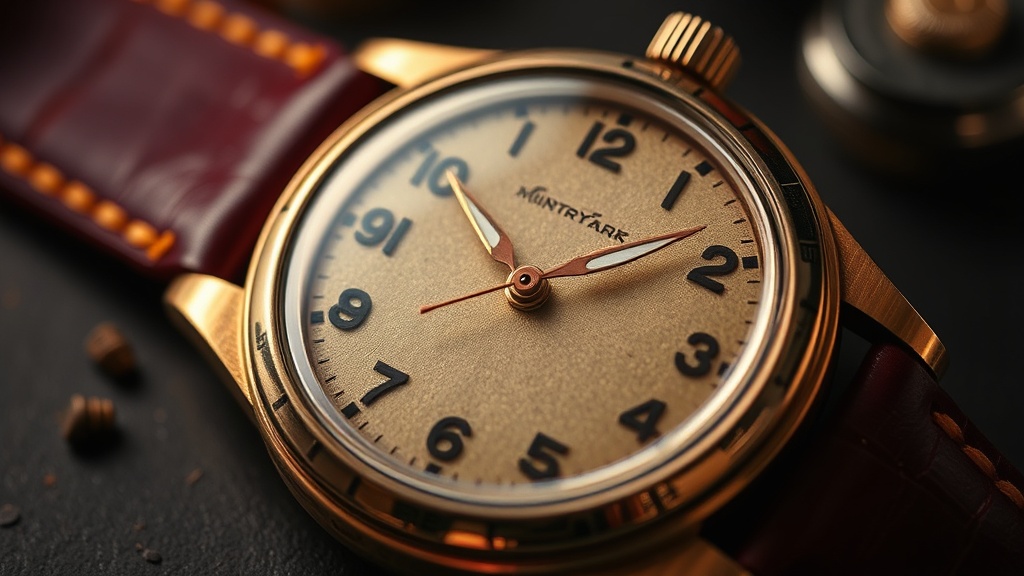
Beyond the Velvet: Preventing Oxidation on Vintage Watch Cases

Quick Tip
Store vintage watches in a low-humidity environment with silica gel packets to prevent metal oxidation.
Beyond the Velvet: Preventing Oxidation on Vintage Watch Cases
Have you ever opened a presentation box only to find a dull, greenish film or a cloudy patina creeping across the edges of a vintage timepiece? While some collectors prize the "character" of aged metals, uncontrolled oxidation can lead to permanent pitting, especially on silver-clad or brass-based vintage cases. Preventing this requires more than just a soft cloth; it requires a controlled environment.
The Humidity Variable
The primary enemy of vintage watch metallurgy is moisture. Even in a climate-controlled room, microscopic amounts of humidity can react with the alloys in a case. To mitigate this, store your collection in a dedicated cabinet equipped with silica gel desiccant packets. For high-value pieces, a small, airtight electronic dry box—similar to those used by professional photographers for camera lenses—is the gold standard. Aim to maintain a relative humidity (RH) between 35% and 45%. Anything higher invites the chemical reaction that leads to tarnish, while anything lower can dry out leather straps.
Material-Specific Care
Different metals require distinct approaches to prevent surface degradation:
- Sterling Silver & Silver-Clad: Avoid frequent polishing with abrasive creams like Cape Cod, as these can strip the thin layer of silver off a vintage case. Instead, use a specialized silver cloth to gently lift surface oxides.
- Stainless Steel: While highly resistant, salt and oils from skin can cause "tea staining" or microscopic corrosion. Wipe the case with a lint-free microfiber cloth after every wear to remove perspiration.
- Gold-Plated (Vermeil): These are the most delicate. Use only a dry, high-quality microfiber cloth. Avoid any liquid cleaners, as they can penetrate the plating and cause the base metal to swell and crack the finish.
Storage Best Practices
Avoid storing watches in direct contact with organic materials like untreated wood or certain types of velvet that may off-gas acidic vapors. If you use a traditional wooden watch box, ensure it is a high-quality, finished piece, as raw wood can release moisture and acids. For long-term preservation, much like preserving vintage silk, the goal is stability. A dedicated watch winder can be helpful for mechanical movements, but ensure the winder itself is not generating excess heat, which can accelerate oxidation in a confined space.
"Precision in preservation is just as important as precision in movement. A well-maintained case protects the soul of the machine."