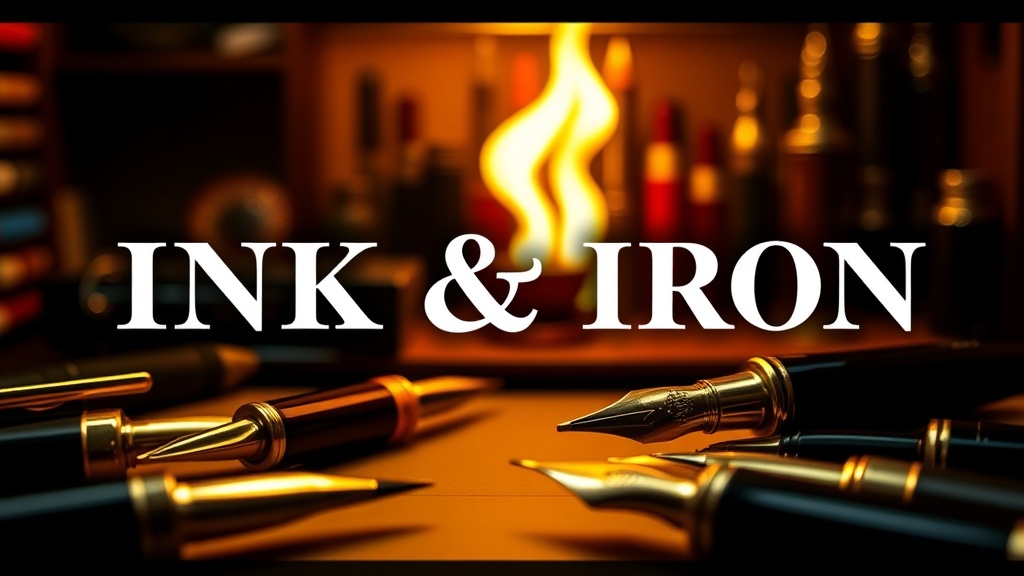
Ink & Iron: Curating a Museum-Grade Fountain Pen Collection

The scent of aged celluloid and oxidized brass hangs heavy in a room lit only by a single, focused desk lamp. On the velvet lining of a mahogany display case, a 1920s Parker Duofold rests beside a Montblanc Meisterstück 149, their surfaces catching the light with varying degrees of luster. The ink in the glass well of a nearby demonstrator is a deep, saturated iron gall, nearly black in the shadows, suggesting a history of formal correspondence. This is not merely a collection of writing instruments; it is an archive of human intent, a curated assembly of engineering and art that demands a specific standard of stewardship.
Building a museum-grade collection requires moving beyond the impulse of mere acquisition. It is a transition from being a consumer to being a conservator. A true collection is defined by its cohesion, its historical significance, and the meticulous maintenance of its individual components. Whether you are hunting for the geometric precision of a Bauhaus-era Pelikan or the ornate flourishes of a Victorian-era Waterman, the goal remains the same: the preservation of mechanical integrity and aesthetic brilliance.
Defining the Core: Establishing a Curatorial Thesis
A common pitfall for the burgeoning collector is the "accumulation trap"—the tendency to buy any high-quality item that catches the eye. A museum-grade collection requires a thesis. Without a central theme, your display case becomes a cluttered drawer of unrelated objects. A strong thesis provides a roadmap for future acquisitions and ensures that every new piece adds value to the existing ensemble.
Consider these potential frameworks for a collection:
- Chronological Evolution: Tracking the development of the fountain pen from the early ebonite reservoir era through the golden age of celluloid to the modern technical innovations of piston-fillers.
- Material Excellence: Focusing exclusively on specific materials, such as the transition from hard rubber (ebonite) to early plastics, or a collection dedicated solely to precious resins and precious metals.
- Mechanical Innovation: A collection centered on filling mechanisms—studying the evolution from lever fillers and button fillers to vacuum fillers and sophisticated piston systems.
- Brand Heritage: Dedicating the collection to the lineage of a single house, such as the various iterations of the Parker 51 or the evolution of the Montblanc 100 series.
Once a thesis is established, every purchase must be scrutinized against it. If your collection focuses on the evolution of filling mechanisms, a beautifully engraved modern gold-nibbed pen that uses a simple cartridge system may be aesthetically pleasing, but it does not advance your specific historical narrative.
The Anatomy of Quality: Evaluating Individual Pieces
To curate at a high level, one must possess the ability to look past the superficial shine of a pen and inspect its structural health. A museum-grade piece is one where the mechanics are as flawless as the exterior. This requires a systematic approach to inspection, moving from the macro to the micro.
1. Structural Integrity and Material Health
When examining vintage celluloid or ebonite, look for "crazing"—the fine, web-like cracks that appear on the surface of the material due to age or improper storage. In ebonite pens, check for "oxidation," where the deep black turns a dull, brownish-grey. While some oxidation is natural, deep pitting can indicate structural failure. Furthermore, inspect the threads of the section and the barrel. A cross-threaded or stripped thread is a permanent defect that devalues the piece significantly.
2. The Nib: The Heart of the Instrument
The nib is the most critical component of the pen. A museum-grade collection should feature nibs that are not only well-aligned but also exhibit the specific characteristics of their era. For example, a vintage 14k gold nib from the 1930s should show a certain level of "spring" or flexibility that modern, stiffer steel nibs often lack. Use a jeweler’s loupe (at least 10x magnification) to inspect the tines. The tines must be perfectly parallel and the tipping material should be smooth, with no visible unevenness that would cause "scratchiness" during use.
If you encounter a piece with a compromised nib, you must understand the limits of repair. While minor adjustments can be made, a fundamental structural flaw in the metal cannot be "fixed" without replacing the component, which often diminishes the historical integrity of the item. For more technical guidance on the nuances of nib adjustment, refer to The Tuning Bench: A Blueprint for Fixing a Scratchy Nib.
3. The Filling Mechanism
A collector must be able to test the internal mechanics. For lever-fillers, ensure the lever moves smoothly without excessive resistance or a "crunchy" feel, which indicates worn internal parts. For piston-fillers, the movement should be fluid and consistent. If you are acquiring a vacuum-filler, verify that the pressure-bearing components are intact and not showing signs of fatigue or cracking.
Environmental Control: The Science of Preservation
A collection is only as good as the environment in which it is kept. The primary enemies of vintage fountain pens are humidity fluctuations, UV light, and chemical instability. A museum-grade collection requires a controlled micro-climate.
Humidity and Temperature Regulation
Extreme dryness can cause ebonite to crack and certain vintage plastics to become brittle. Conversely, excessive humidity can lead to the degradation of internal components and even the growth of mold in organic materials. Aim for a stable relative humidity of 45% to 55%. Avoid storing your collection in attics or basements where temperature swings are common. A dedicated display cabinet with a built-in hygrometer is an essential investment for any serious collector.
Light Exposure and UV Protection
UV light is a silent destroyer. It causes the fading of colorful celluloids (a process known as "sun bleaching") and can even cause the structural breakdown of certain resins. Never display your collection in direct sunlight. If using a glass display case, ensure the glass is UV-treated or use a cabinet with a solid backing to prevent light leakage from the rear. This is a critical consideration for collectors of high-end fashion accessories and vintage textiles as well, as seen in The Art of Preserving Vintage Silk: A Guide to Textile Care.
Chemical Neutrality and Cleaning Protocols
The ink you use is just as important as the pen itself. For a museum-grade collection, avoid "experimental" or highly saturated boutique inks that may contain high levels of pigments or shellac, which can clog a feed or react with the internal components. Stick to proven, pH-neutral inks from established manufacturers like Waterman, Parker, or Montblanc. When cleaning a pen, never use alcohol or harsh detergents; these can dissolve the very materials that make the pen unique. Use only lukewarm water and a drop of pH-neutral dish soap if absolutely necessary, and always ensure the pen is completely dry before storage.
The Art of Display: Presentation as Documentation
In a professional collection, display is not just about aesthetics; it is about documentation. Each piece should be accompanied by a record of its provenance, its historical context, and its maintenance history. A museum-grade display often utilizes a combination of vertical and horizontal arrangements to create visual interest while maintaining accessibility.
Use acid-free materials for any padding or linings in your display cases. Standard foam or velvet can sometimes off-gas chemicals that may react with the pen's surface over long periods. Instead, look for archival-quality materials used in museum exhibitions. When displaying pens, ensure they are positioned so that the weight is distributed evenly, preventing any stress on the cap or the section threads. If you are displaying a collection of high-value items, consider using a UV-filtered acrylic stand to provide both stability and protection.
By treating your collection with the rigor of a curator rather than the impulse of a hobbyist, you ensure that these remarkable instruments remain functional and beautiful for the next generation of writers and historians. The transition from collector to conservator is a lifelong journey of precision, patience, and profound respect for the tools of the trade.