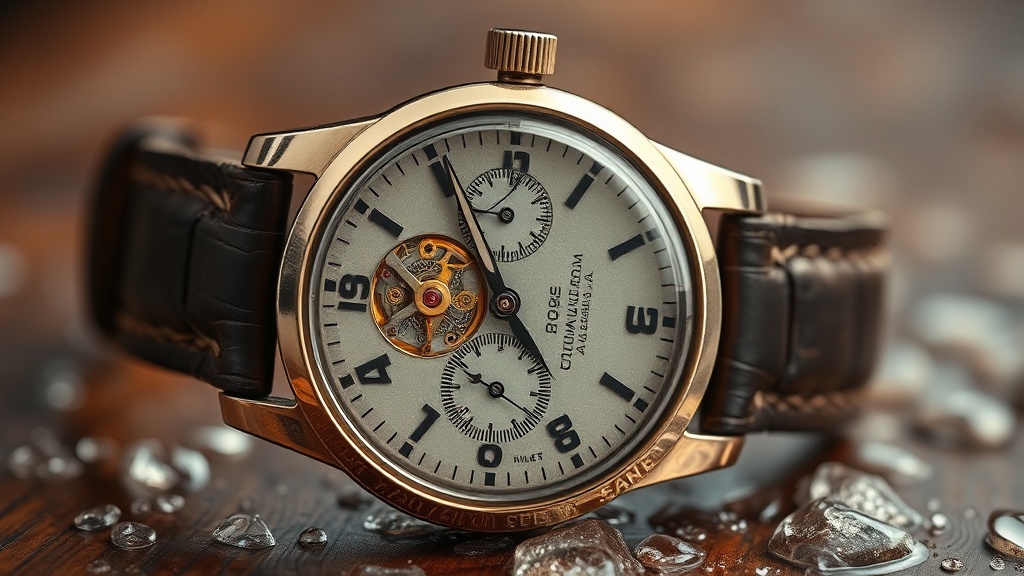
Protecting Your Vintage Mechanical Watch Movements from Humidity

A single drop of moisture inside a mechanical watch movement can cause more damage in hours than years of regular wear. High humidity levels don't just affect the aesthetics of a timepiece; they attack the very metal components that keep it ticking. This post examines how moisture interacts with vintage movements, the specific risks of oxidation and lubrication failure, and the practical steps you can take to keep your collection safe. We'll look at storage solutions, environmental controls, and the physics of why even a "water-resistant" watch isn't immune to atmospheric changes.
How Does Humidity Affect Mechanical Watches?
Humidity causes metal parts to oxidize and lubricants to degrade or lose their viscosity. When moisture enters a movement, it creates a micro-environment where oxidation—essentially rust—can form on steel components like the balance spring or gear teeth. Even if you don't see visible rust, the chemical change in the oils can be devastating. The oil might thicken or even turn acidic, which then eats away at the brass or steel-based parts of the movement.
It’s a bit like the way moisture affects the feed of a vintage fountain pen—if the environment isn't controlled, the internal components suffer. If you've ever read about restoring vintage fountain pens, you know that the internal chemistry of a tool is delicate. Watches are no different. The tiny, precision-machined parts of a Rolex Submariner or a vintage Omega Speedmaster rely on extremely tight tolerances. Even a microscopic layer of oxidation can increase friction, slowing the movement or stopping it entirely.
There are two main ways moisture ruins a watch:
- Direct Oxidation: Water molecules react with the steel components, creating iron oxide (rust). This is often irreversible without a full movement overhaul.
- Lubricant Breakdown: Moisture causes the specialized oils (like Moebius 9010) to emulsify or separate. This leads to "dry" running parts and high friction.
Think of it as a slow-motion catastrophe. You won't see it happening day by day. But one day, you'll wind the crown, and the watch simply won't respond. That's when the real cost begins.
What Is the Ideal Humidity for Watch Storage?
The ideal relative humidity (RH) for storing a mechanical watch collection is between 35% and 45%. Staying within this range prevents both the drying out of lubricants and the onset of oxidation. If the air is too dry, some older lubricants might actually become more brittle, though the primary concern for collectors is almost always the high end of the spectrum.
Most people don't realize that their home environment is constantly fluctuating. A basement might be a 70% humidity zone, while an upstairs bedroom is much drier. If you keep your vintage Patek Philippe in a humid basement, you're asking for trouble. You need a controlled environment to ensure the longevity of the metalwork.
Here is a quick breakdown of how different environments impact your collection:
| Environment Type | Typical Humidity | Risk Level | Impact on Movement |
|---|---|---|---|
| Basement/Damp Cellar | 60% - 80% | High | Rapid oxidation and rust. |
| Standard Living Room | 40% - 50% | Low | Ideal for long-term storage. |
| Air Conditioned Office | 30% - 40% | Minimal | Safe, but watch for dry lubricants. |
I've found that using a digital hygrometer is the only way to be certain. Don't guess. If you're storing a high-value collection, a $15 sensor from a hardware store is a small price to pay for peace of mind. It's much like checking the ink level in a pen—you need to know the state of your tools before they fail you.
Can a Watch Box Protect Against Moisture?
A standard wooden or leather watch box provides very little protection against moisture and can actually trap humidity inside if not properly managed. While a box might protect against dust and scratches, it isn't a vacuum-sealed environment. To truly protect a movement, you need active or passive moisture absorption.
Many collectors use silica gel packets, but there's a catch. If you put a packet in a box and forget about it, that packet will eventually become saturated with moisture and stop working. In fact, a saturated silica packet can actually start releasing moisture back into the box. You have to monitor them.
If you're looking for better protection, consider these three methods:
- Dry Boxes (Electronic): These are used heavily in the photography world. They are airtight, electronic cabinets that allow you to set a specific humidity level. They are the gold standard for serious collectors.
- Desiccant Packs: These are cheap and easy. Just remember to "recharge" them (bake them in an oven, if the instructions allow) or replace them regularly.
- Watch Winders: While winders keep the movement running, they don't inherently protect against humidity. In fact, a winder that is left in a humid room provides more opportunities for moisture to enter the movement through the gaskets.
The way a watch winder works is interesting. It keeps the tension in the mainspring, which is great for accuracy, but it doesn't stop the atmosphere from interacting with the internal components. If you use a winder, make sure it's in a climate-controlled room.
How Do I Know if My Watch Has Water Damage?
You can identify moisture damage by looking for fogging under the crystal or noticing a significant change in the watch's amplitude and rate. If you see tiny droplets or a "mist" inside the glass, the seal has failed and moisture has already entered the movement. This is an emergency for a vintage timepiece.
If you see fogging, do not wait. The moisture is currently reacting with the metal. This is the moment to act. You might notice the watch running a few seconds fast or slow—this is often a sign that the lubrication has been compromised. A change in the "heartbeat" of the watch is a major red flag.
Check these common symptoms:
- Condensation: A foggy appearance on the inside of the crystal.
- Erratic Timing: The watch suddenly gains or loses significant time.
- Aesthetic Changes: Darkening of the dial or spotting on the movement plates.
If you see any of these, take the watch to a professional watchmaker immediately. Trying to "dry it out" with a hairdryer is a mistake. Heat can damage the lubricants and the delicate hairspring. A professional can open the case, clean the movement, and ensure the gaskets are replaced. According to Wikipedia's documentation on watchmaking, the precision of these components is such that even minor environmental changes can require a full service to restore accuracy.
It's a lot like the precision required in my old drafting days—one tiny error in the environment or the process can throw the whole project off. Treat your watches with that same level of respect. A little bit of care now prevents a very expensive repair later.