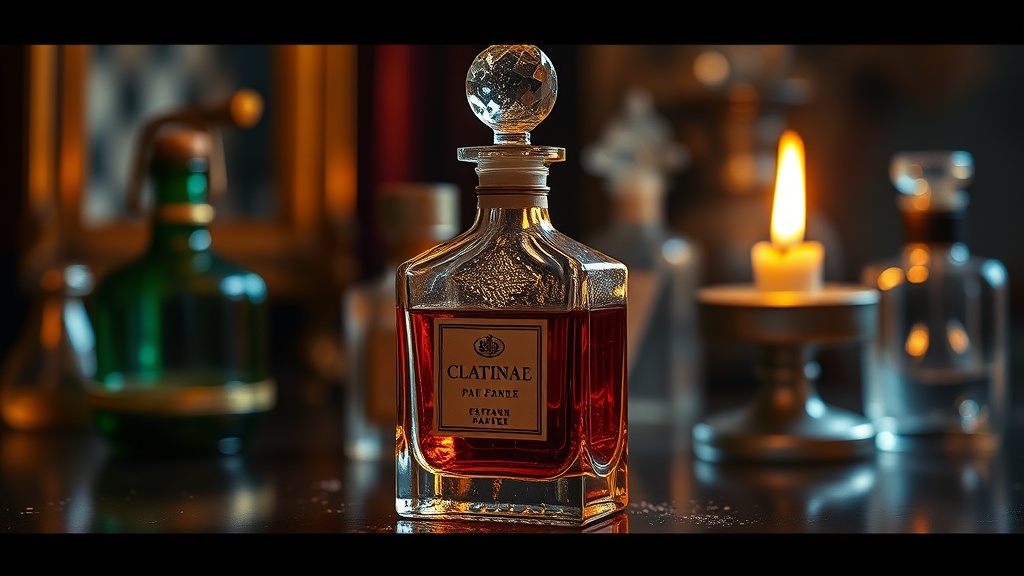
Why Your Vintage Designer Perfume Bottles Are Leaking

Degraded Rubber Gaskets
Evaporation and Pressure Changes
Micro-cracks in Glass Stoppers
A single drop of aged perfume can act as a powerful solvent, capable of dissolving lacquer, etching glass, or destroying the finish on a collector's wooden vanity in a matter of hours. Collectors of vintage designer fragrances—from the heavy crystal flacons of 1920s Guerlain to the mid-century geometric glass of Chanel—often face the frustrating reality of slow leaks or sudden spills. This post examines the mechanical and chemical reasons why these precious liquids escape their containers and how you can identify and mitigate these risks to preserve both the scent and your collection.
Degradation of Natural Cork Stoppers
Before the widespread adoption of airtight plastic and metal crimp seals, high-end perfumery relied heavily on natural cork. While cork provides an organic aesthetic, it is a biological material subject to compression, rot, and chemical reaction. If you are holding a vintage bottle from the early 20th century, the seal is likely a natural cork stopper.
The Role of Alcohol and Volatility
Perfume is primarily composed of ethanol and aromatic oils. Over decades, the high alcohol content can cause the cellular structure of a natural cork to dry out and shrink. As the cork loses its elasticity, it can no longer maintain a pressurized seal against the glass neck of the bottle. This creates microscopic gaps through which the liquid can seep via capillary action. Furthermore, if the perfume has a high concentration of citrus or certain essential oils, these can chemically attack the cork, causing it to become "mushy" or brittle, leading to a total failure of the seal.
Compression Set and Memory
Cork has a "memory." If a bottle has been stored upright for decades, the weight of the liquid and the constant pressure against the stopper can cause the cork to compress permanently. Once a cork has undergone this compression set, it will not expand back to its original shape even if the bottle is tilted or moved, resulting in a persistent leak. When inspecting a vintage piece, always check if the cork sits slightly below the rim of the bottle; this is a primary indicator of a failing seal.
The Failure of Glass-on-Glass Seals
Some of the most highly sought-after vintage collectibles utilize a "stopper" design where a solid glass or crystal plug sits directly in a ground-glass neck. While these are aesthetically stunning and theoretically airtight, they are highly susceptible to environmental changes.
Thermal Expansion and Contraction
Glass is an exceptional insulator, but it is not immune to thermal physics. If a collection is stored in an environment with fluctuating temperatures—such as a room without climate control—the glass stopper and the bottle neck will expand and contract at slightly different rates. This micro-movement can break the airtight vacuum seal. In a high-humidity environment, moisture can also get trapped between these surfaces, leading to a "stuck" stopper or, conversely, a leak if the seal is compromised by a change in atmospheric pressure.
Surface Abrasion and Micro-fractures
The seal of a ground-glass stopper relies on a perfectly smooth, microscopic fit. Over time, vibrations or even the simple act of removing and replacing the stopper can cause microscopic abrasions. These tiny scratches create pathways for the perfume to escape. If you notice a slight "grit" when moving a glass stopper, the seal is likely compromised, and the liquid is at risk of evaporation or leakage.
Corrosion of Metal Atomizers and Sprayers
The transition from splash bottles to spray atomizers in the mid-20th century introduced a new set of mechanical vulnerabilities. Vintage metal sprayers, often made of brass or aluminum with a thin plating of gold or silver, are prone to internal failure.
Oxidation of the Internal Spring
Inside a vintage atomizer is a small metal spring that facilitates the pumping action. Over fifty or sixty years, the alcohol and water content in the perfume can migrate into the pump mechanism. This leads to oxidation (rusting) of the spring. As the spring degrades, it may no longer return to its original position fully, leaving the valve slightly open. This allows the perfume to slowly "weep" out of the nozzle even when the pump is not being depressed.
Perishing of Rubber and Plastic Tubing
The dip tube (the straw that carries liquid from the bottom of the bottle to the nozzle) and the internal bulb (in older, non-mechanical atomizers) are often made of organic materials like rubber or early plastics. These materials are highly susceptible to "perishing." The essential oils in the perfume can act as a solvent, breaking down the molecular bonds of the rubber. This results in a tube that becomes brittle, cracks, or develops pinhole leaks. Once the tube is compromised, the liquid can leak into the neck of the bottle, eventually escaping through the spray head.
The Impact of Capillary Action in Decorative Collars
Many vintage designer bottles feature elaborate decorative elements, such as metal collars, filigree, or heavy metal caps. While these add to the collectible value, they often hide the primary site of a leak.
Hidden Accumulation
When a leak occurs due to a failing seal, the liquid often does not drip immediately. Instead, it travels via capillary action—the ability of a liquid to flow in narrow spaces without the assistance of gravity. The liquid climbs the threads of the bottle neck and settles into the decorative metal collar or the underside of the cap. Because these areas are often ornate or textured, the liquid can remain trapped there for a long time, slowly oxidizing the metal or dissolving the adhesive used to attach the decorations. If you see a "crust" or a sticky residue around a metal collar, it is a sign that a leak has already occurred and is currently being masked by the design.
Metal Reactivity and Tarnish
The chemical composition of the perfume can react with the metal components of the bottle. For example, a perfume with a high sulfur content can accelerate the tarnishing of silver-plated vintage bottles. This isn't just a cosmetic issue; the chemical reaction can actually create a byproduct that further degrades the seal, creating a feedback loop that leads to more frequent leaking.
Preventative Maintenance for Collectors
To protect your investment, you must treat vintage perfume bottles with the same precision one might use when handling vintage designer metal frames. Proper storage and inspection are your best defenses.
- Maintain Constant Temperature: Store your collection in a cool, dark, and temperature-stable environment. Avoid bathrooms or any area where humidity and temperature fluctuate significantly.
- Vertical Storage: For bottles with cork or natural seals, store them upright. This minimizes the surface area of the liquid in contact with the stopper and reduces the pressure on the seal.
- Regular Inspection: Every few months, visually inspect the neck and the base of the atomizers. Look for any signs of discoloration, "crusting," or sticky residues around the collar.
- Avoid Frequent Decanting: Every time you remove a vintage stopper—especially a ground-glass or cork one—you risk compromising the seal. Only open the bottle when absolutely necessary for display or a controlled transfer.
- Use Protective Sleeves: If you must move a collection, use archival-grade, acid-free tissue or specialized display cases to ensure that if a leak does occur, it is contained and does not damage other items.
Understanding the mechanical vulnerabilities of these objects allows you to move from being a passive owner to an active steward of your collection. Whether it is the failure of a rubber tube or the shrinking of a cork, the culprit is almost always a predictable result of chemistry and physics. By applying these principles, you can ensure your vintage scents remain preserved for decades to come.