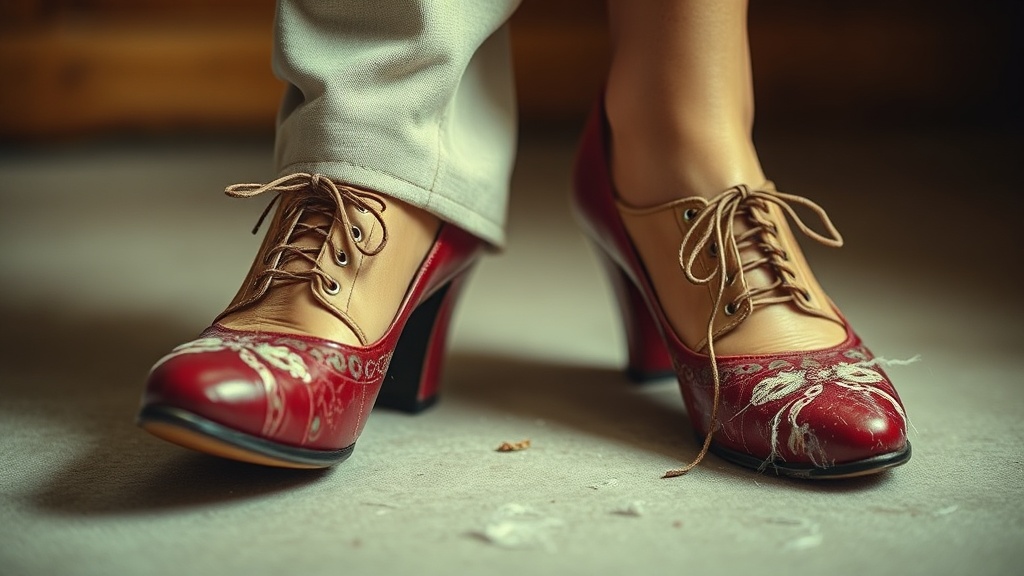
Why Your Vintage Designer Shoes Are Peeling

The Science of Surface Failure
Approximately 70% of vintage designer footwear degradation is caused by a chemical breakdown of the topcoat rather than physical wear on the base material. When you purchase a vintage pair of Gucci loafers or Chanel slingbacks, you are not just buying leather; you are buying a complex, multi-layered assembly of organic fibers, tanning agents, and synthetic finishes. Understanding why these surfaces peel is essential for any collector looking to preserve the structural and aesthetic integrity of their investment. This guide examines the mechanical and chemical reasons behind surface delamination and provides technical steps for prevention and care.
Peeling, or delamination, occurs when the bond between the substrate (the leather or textile) and the finish (the pigment or protective coating) fails. This is rarely a single-issue problem. It is typically a confluence of environmental stressors, improper chemical exposure, and the natural aging of polymer-based coatings. To save a pair of shoes, you must first identify which specific failure mode you are facing.
Hydrolysis and the Breakdown of Polyurethane
Many high-end designer shoes from the 1980s and 1990s utilized polyurethane (PU) coatings to achieve a specific sheen or to provide a waterproof barrier. While PU provides a sleek, uniform look, it is highly susceptible to hydrolysis. Hydrolysis is a chemical reaction where water molecules break the polymer chains within the coating. Over time, the coating loses its elasticity and becomes brittle. Once the polymer chains are sufficiently broken, the coating can no longer flex with the movement of the shoe, leading to cracks and eventual peeling.
This is particularly common in footwear stored in humid environments or in climates like Singapore or Miami, where high ambient moisture accelerates the reaction. If you notice the surface of a vintage designer pump starting to flake off in small, translucent scales, you are likely witnessing the terminal stages of polyurethane hydrolysis. At this stage, the damage is often irreversible through topical treatments alone, as the structural integrity of the coating itself has been compromised.
The Role of pH and Chemical Contamination
The leather used in luxury footwear is a highly sensitive organic material. It is treated with specific tannins and oils to maintain a precise pH level. When this balance is disrupted, the leather can shrink or expand, causing the surface finish to pull away. Common culprits for this chemical imbalance include:
- Improper Cleaning Agents: Using household detergents or alcohol-based wipes to clean vintage designer shoes can strip the essential oils and drastically alter the pH of the leather.
- Salt Exposure: In colder climates, road salt is a significant threat. Salt is hygroscopic, meaning it draws moisture out of the material. This creates localized areas of extreme dryness and chemical tension, which can cause the pigment layer to crack and peel.
- Excessive Conditioning: While leather needs moisture, over-applying heavy oils or waxes can seep into the grain and push the finish outward from the inside, leading to a "bubbling" effect that eventually results in peeling.
If you are currently managing a diverse collection of vintage goods, you may already be familiar with how chemical sensitivity affects different materials. For instance, understanding how to clean vintage designer leather handbags safely will provide a foundational understanding of the pH sensitivity and oil requirements necessary to prevent surface failure in footwear.
Thermal Expansion and Mechanical Stress
From a mechanical perspective, a shoe is a dynamic object. Every step involves a combination of flexion, torsion, and compression. A high-quality vintage shoe is engineered to handle these forces, but the surface finish is often the weakest link. Thermal expansion plays a significant role here. If shoes are stored near a heat source—such as a radiator or in a hot car—the leather expands. When the temperature drops, the leather contracts.
The topcoat, often a synthetic resin, does not always possess the same coefficient of thermal expansion as the organic leather beneath it. This creates a "shear stress" at the interface of the two materials. Over hundreds of cycles of heating and cooling, the bond weakens. This is why storing your vintage designer collection in a temperature-controlled environment is not just a suggestion, but a technical necessity for preservation.
Identifying the Type of Peeling
To treat the issue, you must first diagnose the specific type of failure occurring on the surface. Use the following diagnostic criteria:
- The "Flake" (Polyurethane Failure): The surface comes off in thin, crisp, almost plastic-like shards. This is typical of synthetic coatings or heavily finished patent leathers. This is usually a sign of age-related hydrolysis.
- The "Crack" (Dryness/Tannin Failure): The surface shows fine lines or deep fissures, often revealing a lighter color underneath. This is caused by a lack of moisture or an imbalance in the leather's internal oils.
- The "Bubble" (Adhesion Failure): The surface looks slightly raised or uneven before it actually breaks. This indicates that the bond between the pigment and the substrate is failing, often due to moisture or improper conditioning.
Prevention and Maintenance Protocols
While you cannot reverse the hydrolysis of a synthetic coating, you can significantly delay the onset of peeling through disciplined maintenance. Precision is key; treat your footwear with the same care one would afford a delicate mechanical instrument.
1. Environmental Control
Store your vintage designer shoes in a cool, dry, and dark environment. Avoid any area where temperature or humidity fluctuates wildly. Using cedar shoe trees is highly recommended, not just for shape retention, but because cedar naturally absorbs a small amount of excess moisture, helping to regulate the micro-environment inside the shoe.
2. Strategic Hydration
Do not treat leather with "all-purpose" conditioners. For vintage designer shoes, use highly refined, pH-balanced leather creams. If the shoes are patent leather, avoid traditional creams entirely; patent leather is a finished surface and does not "absorb" oils in the same way as full-grain leather. For smooth calfskin, apply a minimal amount of high-quality cream using a lint-free cloth, following a circular motion to ensure even distribution without saturating the fibers.
3. The "Dry Clean" Approach
The best way to clean vintage designer shoes is to avoid liquid as much as possible. Use a soft horsehair brush to remove dust and surface particulates. Dust is abrasive and can act like sandpaper against a delicate finish if not removed regularly. If a damp cloth must be used, ensure it is barely moist and that the shoes are dried immediately with a soft cloth in a shaded area.
A Note on Restoration Limits
As someone who works with the precision of a drafting tool, I must be clear: some damage is structural. If the peeling is caused by the total breakdown of a polyurethane layer, no amount of cream or polish will "re-bond" that layer to the leather. In these cases, professional cobblers may offer a "re-dye" or a "re-finish," which involves stripping the old, failing layer and applying a new one. This is a significant undertaking and should only be performed by specialists who understand the chemistry of the specific leather type.
Maintaining a vintage collection requires a shift in mindset from "cleaning" to "preservation." By understanding the chemical and mechanical vulnerabilities of your footwear, you can ensure that your designer pieces remain in museum-quality condition for decades to come.