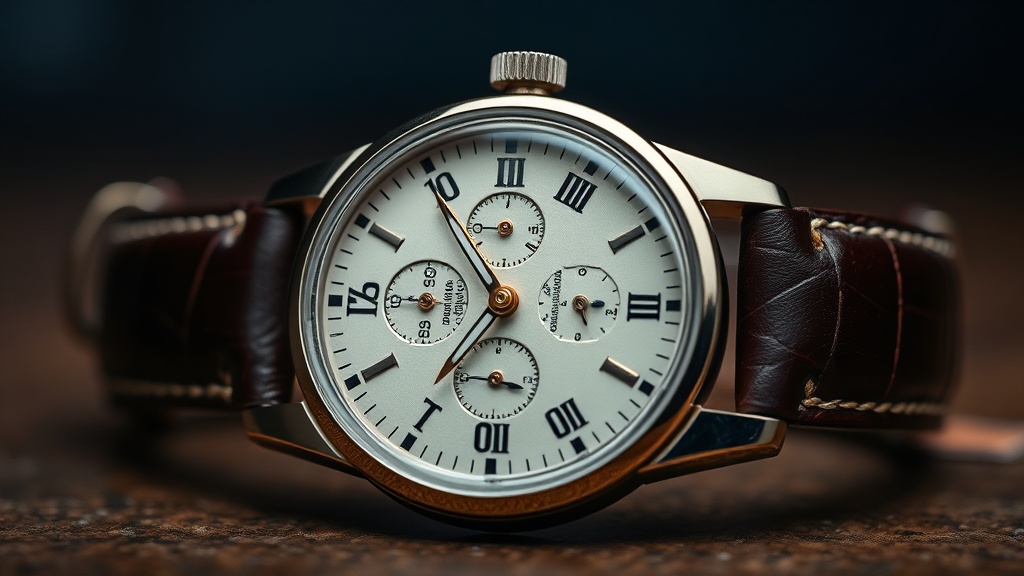
Keeping Your Vintage Mechanical Watch Collection Accurate

The Impact of Temperature Fluctuations
Magnetic Field Interference and Prevention
Humidity Control for Long-Term Storage
Have you ever wondered why a vintage Omega or a vintage Rolex seems to lose several minutes a day despite being wound perfectly?
Mechanical watches are marvels of precision engineering, but they aren't "set and forget" devices. This guide covers the practical steps you need to take to maintain accuracy, the frequency of professional servicing, and how environmental factors impact your collection's performance. Keeping a mechanical timepiece accurate requires a mix of proper storage, regular movement inspection, and an understanding of how physical movement affects the internal balance wheel.
How Often Should You Service a Vintage Mechanical Watch?
A vintage mechanical watch typically requires a full service every three to five years to maintain optimal accuracy and longevity.
Think of a watch movement like a high-performance engine. Just as a car needs an oil change, a watch needs fresh lubricants. Over time, the oils used to lubricate the jewels and pivots begin to dry up or become gummy. When this happens, friction increases. Increased friction leads to erratic timekeeping—either running too fast or too slow—and eventually, catastrophic wear on the components.
If you notice your timepiece is suddenly gaining or losing significant time, don't just wind it harder. That's a sign that the lubrication has failed or a part is struggling. It's often better to address these issues early. Waiting too long can turn a simple lubrication job into a costly overhaul of the entire movement.
Here is a general timeline for maintenance-heavy collections:
- Every 3-5 Years: Full movement service (cleaning, oiling, and adjusting).
- Every 1-2 Years: Water resistance testing (especially for vintage dive watches).
- As Needed: Gasket replacement if the watch is worn in high-humidity environments.
I often see collectors who treat their watches like set-it-and-forget-it digital pieces. That's a mistake. A mechanical movement is a living, breathing thing that responds to its environment. If you treat it with the same precision I use when adjusting a fountain pen nib, it'll serve you for decades.
Does Humidity Affect Watch Accuracy?
Humidity affects watch accuracy primarily by causing internal oxidation and affecting the viscosity of the lubricants within the movement.
While the movement itself is sealed, it isn't airtight. Moisture can seep in through the crown or the gaskets. Once inside, that moisture can cause tiny amounts of rust on the hairspring or the balance staff. Even a microscopic layer of oxidation can change the weight or the tension of the parts, throwing the timing off.
If you own a collection that includes vintage diver watches, you're likely already aware of the importance of seals. However, even if you aren't diving, moisture is a silent enemy. If you live in a coastal area or a high-humidity climate, the risk is higher.
To protect your pieces, I highly recommend protecting your vintage mechanical watch movements from humidity through proper storage. Using a dry box or silica gel packets in your watch roll is a smart move. It keeps the internal environment stable.
On the flip side, if you've been wearing a watch in a sauna or a hot bath, you're asking for trouble. The rapid temperature shifts can cause the metal to expand and contract, potentially pulling moisture through the seals.
How Can You Monitor Accuracy at Home?
You can monitor accuracy at home using a timegrapher or by comparing your watch against a highly accurate digital reference like a smartphone or a highly precise atomic clock.
A timegrapher is the gold standard. It's a tool that listens to the "heartbeat" of the watch. It tells you the beat error, the amplitude, and the rate. If you're serious about your collection, a basic electronic timegrapher is a worthwhile investment. It allows you to see if a watch is "beating" strongly or if it's struggling to maintain its rhythm.
If you don't want to buy a machine, use the "daily drift" method. Check your watch against a reliable source at the same time every morning. Note the difference. If the watch is consistently losing 10 seconds a day, that's a predictable error. If it's losing 5 seconds one day and 40 seconds the next, you have a mechanical issue that requires a professional's eyes.
Watch the following variables when testing:
| Variable | Effect on Accuracy | What to Look For |
|---|---|---|
| Position | Gravity affects the balance wheel. | Does it run differently crown-up vs. crown-down? |
| Temperature | Heat expands the hairspring. | Does it slow down in the cold? |
| Power Reserve | Accuracy drops as tension fades. | Does it lose time as it nears the end of the wind? |
It's worth noting that a vintage watch will rarely be as accurate as a modern quartz watch. If you're expecting sub-second precision from a 1960s mechanical piece, you're going to be disappointed. Aim for "acceptable" accuracy rather than perfection.
What Are the Best Storage Practices for Vintage Watches?
The best storage practice is to keep your watches in a controlled environment that is temperature-stable, dry, and away from strong magnetic fields.
Magnetism is a silent killer of accuracy. If you store your watches near unshielded speakers, high-end audio equipment, or even certain laptop-bag clasps, the hairspring can become magnetized. A magnetized hairspring causes the coils to stick together, making the watch run extremely fast—sometimes gaining hours in a single day. If your watch suddenly starts racing, it's likely magnetized.
Temperature also plays a role. Extreme heat can degrade the oils and even damage the gaskets. I prefer to keep my collection in a dedicated watch box in a climate-controlled room. Avoid storing them in a bathroom or near a window where the sun hits directly.
When it comes to leather straps, don't forget that they need care too. A dry, brittle strap can ruin the aesthetic of a beautiful vintage timepiece. I've written about keeping vintage leather goods supple, and the same logic applies to your watch straps. A well-maintained strap ensures the watch sits comfortably and stays securely on your wrist, preventing unnecessary jarring-motion that could affect the movement.
Lastly, consider a watch winder for your automatic pieces. While a winder won't necessarily make a watch more "accurate," it keeps the lubricants from settling and ensures the watch is always ready to wear. Just don't over-rely on it; even an automatic needs a rest occasionally. A mechanical movement is a machine, and sometimes, it's best to let it sit still.
Precision is a partnership between the maker and the owner. You've invested in these pieces because of their history and their mechanical soul. Respect that soul with a bit of regular maintenance, and they'll keep time for a lifetime.