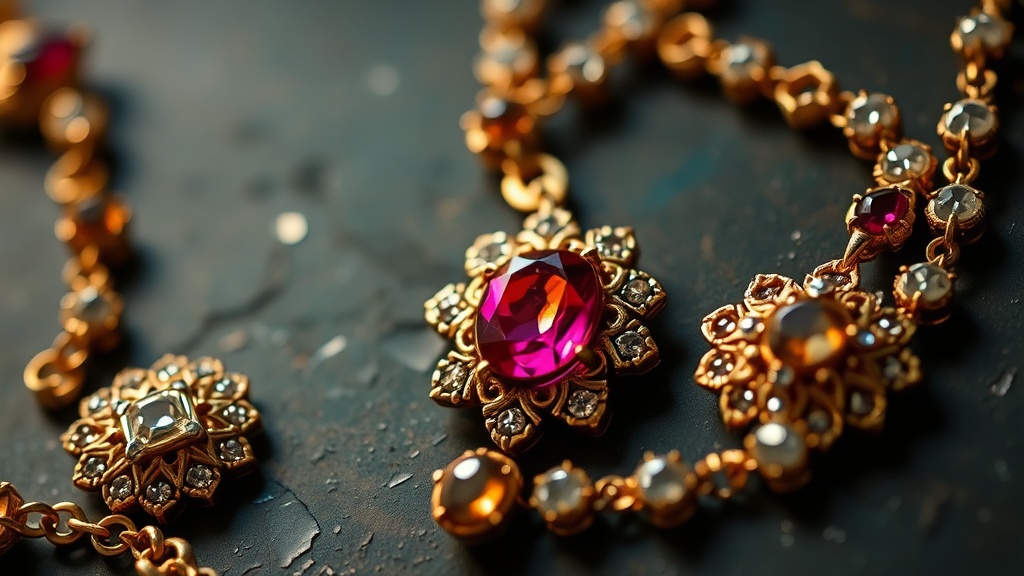
Why Vintage Designer Jewelry Tends to Tarnish

Sulfur in the Air
Skin Chemistry and pH Levels
Storage Humidity and Moisture
Residual Perfumes and Lotions
Metal Alloy Composition
Have you ever opened a vintage jewelry box only to find your favorite pieces covered in a dull, dark, or even greenish film? This discoloration, commonly referred to as tarnish, is a frequent frustration for collectors of vintage designer accessories. Understanding why this happens is essential for anyone looking to preserve the value and aesthetic integrity of high-end vintage pieces, whether they are gold-plated Chanel clips from the 1980s or sterling silver Tiffany & Co. pendants from the 1940s. This post examines the chemical and environmental factors that cause oxidation and corrosion in vintage jewelry and provides practical methods for prevention and care.
The Chemistry of Oxidation and Tarnish
Tarnish is not a sign of decay in the way that mold affects leather; rather, it is a chemical reaction occurring on the surface of the metal. Most vintage designer jewelry is not solid gold or platinum, but rather a base metal that has been plated or layered. The primary culprit in the tarnishing process is oxidation, where metal reacts with oxygen and other elements in the atmosphere to create a thin layer of corrosion.
Silver and Sulfur Exposure
Sterling silver (.925) is one of the most common materials found in vintage jewelry, and it is also one of the most reactive. The dark, blackish film seen on vintage silver pieces is typically silver sulfide. This occurs when the silver reacts with sulfur compounds in the air. This is why a silver necklace might look pristine in a sealed container but turn black after sitting on a vanity for a week. Common sources of sulfur include certain types of paper (like cheap cardboard boxes), rubber bands, and even the trace amounts of sulfur found in volcanic gases or certain industrial areas.
Copper and the "Green" Effect
If you notice a greenish residue on your skin after wearing a vintage piece, you are likely looking at the oxidation of copper. Many vintage costume jewelry pieces, such as those from mid-century brands like Trifari or Monet, use a copper-based alloy as a base metal. When copper is exposed to moisture and the natural acidity of human skin, it produces copper carbonate or copper chloride, which manifests as a green film. This is particularly common in pieces with heavy gold plating that has begun to wear thin, exposing the underlying copper alloy.
Environmental Triggers for Deterioration
The environment in which you store your collection is just as important as the jewelry itself. Just as you must consider protecting vintage designer handbags from humidity and mold, you must manage the micro-climate of your jewelry storage to prevent rapid oxidation.
Humidity and Moisture Absorption
High humidity levels accelerate almost all forms of metal corrosion. Water molecules in the air act as a catalyst for chemical reactions. In a humid environment, such as a bathroom or a coastal residence, the moisture settles on the metal surface, facilitating the reaction between the metal and atmospheric gases. For vintage pieces with organic components—such as pearls or certain types of bakelite—excessive moisture can also cause the organic material to crack or degrade, further complicating the restoration process.
Atmospheric Pollutants and Volatile Organic Compounds (VOCs)
Modern living environments are filled with invisible chemical agents that can ruin a vintage collection. Volatile Organic Compounds (VOCs) found in household cleaners, hairsprays, and perfumes are highly reactive. If you apply a heavy perfume and immediately put on a vintage gold-plated earring, the chemicals in the spray will settle on the metal and begin a localized oxidation process. This often results in "pitting," where the plating actually begins to lift or dissolve, creating a textured, uneven surface that is difficult to restore.
Common Causes in Daily Wear
The way you interact with your jewelry during daily use is perhaps the most significant factor in how quickly it will tarnish. The human body is a complex chemical factory, and our natural biology can be quite harsh on vintage metals.
Skin pH and Natural Oils
Every person has a unique skin pH. People with more acidic skin tend to tarnish metals more quickly. The natural oils (sebum) and sweat produced by the skin contain salts and acids that react with metals like silver and copper. This is why a ring might look perfect on one person but turn a finger green on another. When wearing vintage designer pieces, it is vital to ensure the skin is dry and clean, as any buildup of lotion or sweat will accelerate the reaction.
The Impact of Personal Care Products
The "Last On, First Off" rule is the gold standard for jewelry collectors. This means your jewelry should be the very last thing you put on in the morning and the very first thing you take off at night. This prevents contact with:
- Perfumes and Colognes: The alcohol and chemical fixatives are highly corrosive.
- Lotions and Creams: These create a film that traps moisture and chemicals against the metal.
- Hand Sanitizer: The high alcohol content and various additives can strip the protective lacquer or plating from vintage pieces.
- Sunscreen: The chemicals used in sun protection can react with the metals in gold-plated jewelry, causing discoloration.
Practical Prevention and Storage Strategies
To maintain the value of your collection, you must move beyond passive storage and implement an active preservation strategy. Treating your jewelry with the same precision one would use for protecting vintage watch crystals will yield much better long-term results.
Use Airtight Environments
The best way to stop oxidation is to limit the amount of oxygen and sulfur available to the metal. For high-value vintage pieces, avoid open-air jewelry trees or velvet-lined trays that are exposed to the room. Instead, use airtight jewelry boxes or individual small polyethylene bags (often called "zip-locks"). By creating a sealed environment, you effectively "pause" the oxidation process. If you are storing sterling silver, consider adding a small anti-tarnish strip or a packet of silica gel to the box to absorb moisture and sulfur gases.
Avoid Common Storage Mistakes
Many collectors make the mistake of storing different types of jewelry together. This is a significant error. For example, storing a piece of untreated leather (like a vintage watch strap) in the same compartment as a silver necklace can cause the silver to tarnish rapidly. The leather off-gasses sulfur as it ages, which will react with the silver. Always separate metals, organic materials (like pearls), and leather goods into distinct, sealed containers.
The Importance of Regular Inspection
Prevention is much easier than restoration. Set a schedule—perhaps once every three months—to inspect your collection. Look for signs of "micro-tarnish," which appears as a slight dullness rather than a black coating. If you catch tarnish in its early stages, it can often be removed with a simple, non-abrasive method. If you wait until the metal has pitted or the plating has worn away, the damage is often permanent and cannot be "cleaned" back to its original state.
A Note on Restoration Limits
It is important to distinguish between tarnish (a surface reaction) and wear (the loss of material). If a vintage piece has lost its gold plating due to years of friction, no amount of cleaning will bring the gold back. In these cases, the piece requires professional replating. Similarly, if a silver piece has developed deep pitting due to acid exposure, a simple polish will not restore the smooth surface. As a collector, you must learn to identify when a piece simply needs a gentle cleaning and when it requires a professional conservator.